Discover the fascinating world of the Papillon and how this playful dog symbolizes organization and joy in everyday life.
Er zijn momenten in het leven waarop je een metgezel nodig hebt die begrijpt hoe belangrijk structuur is. Een vriend die je herinnert aan afspraken, die naast je zit terwijl je plannen maakt voor de toekomst, en die tegelijkertijd zorgt voor die onmisbare portie vrolijkheid in je dagelijkse routine. De papillon, met zijn opvallende vlinderachtige oren en levendige persoonlijkheid, is zo'n bijzondere metgezel. Deze kleine hond met groot karakter heeft door de eeuwen heen een speciale plek veroverd in de harten van mensen die waardering hebben voor verfijning, intelligentie én een vleugje speelsheid. Het is geen toeval dat deze gezelschapshond vaak wordt geassocieerd met een georganiseerd en bewust leven.
De geschiedenis achter de naam
De papillon dankt zijn naam aan het Franse woord voor vlinder. Wanneer je naar deze elegante hond kijkt, begrijp je meteen waarom. Zijn grote, franjevormige oren staan rechtop als de gespreide vleugels van een tropische vlinder die net is neergestreken. Het is een beeld dat al eeuwenlang kunstenaars en hondenliefhebbers fascineert.
Van Europese hoven naar moderne huishoudens
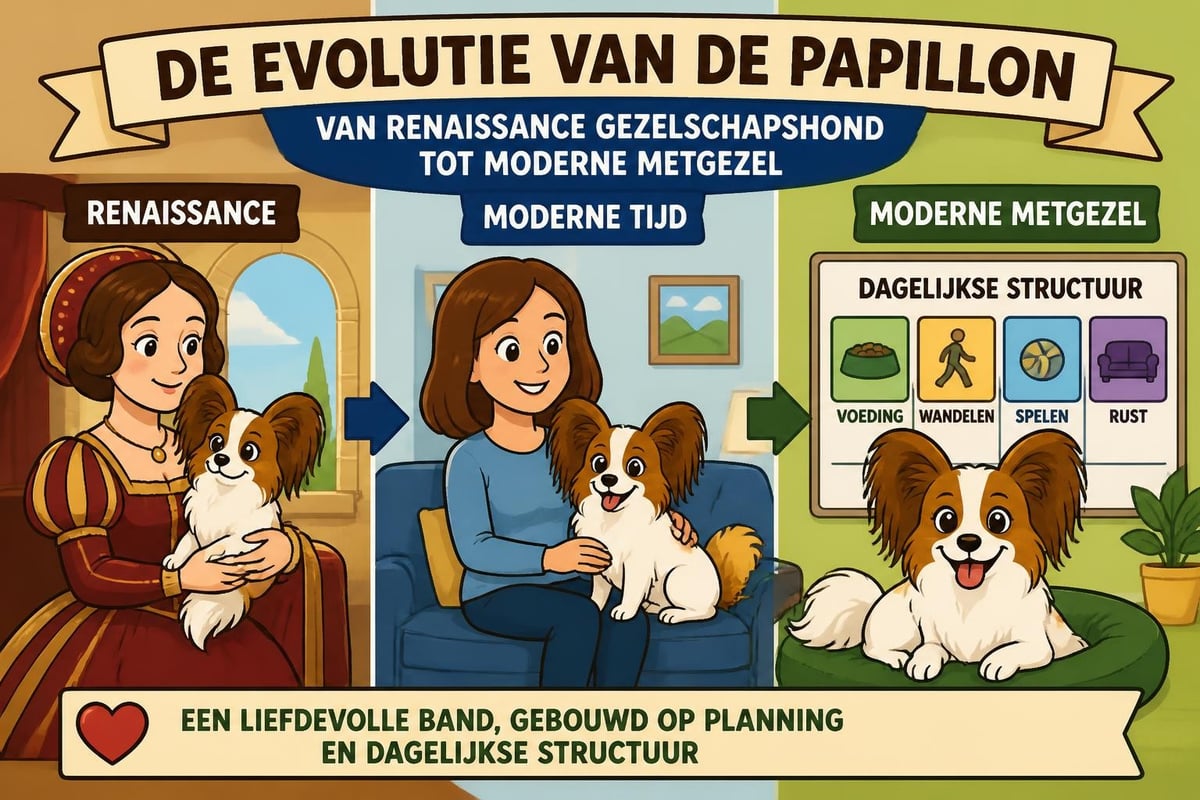
In de zestiende en zeventiende eeuw waren papillons de favoriete gezelschapshonden van Europese aristocraten. Marie Antoinette had er één, net als Madame de Pompadour. Deze kleine hondjes werden afgebeeld op schilderijen van Rubens, Rembrandt en andere oude meesters. Ze waren niet alleen statussymbolen, maar ook trouwe metgezellen die hun eigenaren vergezelden tijdens lange dagen aan het hof.
Belangrijke historische momenten:
Eerste afbeeldingen in Italiaanse renaissance-kunst rond 1500
Populariteit aan het Franse hof in de 18e eeuw
Officiële erkenning als ras in de late 19e eeuw
Ontwikkeling van de moderne rasstandaard in het begin van de 20e eeuw
Die rijke geschiedenis heeft de papillon gevormd tot wat hij vandaag is: een intelligente, alerte hond die zich perfect aanpast aan het moderne leven. Hij gedijt in gestructureerde omgevingen waar routine en planning belangrijk zijn.
Karakter en persoonlijkheid
Wat maakt de papillon nu echt bijzonder? Het is de unieke combinatie van eigenschappen die je zelden in één hondje aantreft. Deze honden zijn energiek maar niet hyper, intelligent maar niet koppig, aanhankelijk maar niet afhankelijk. Ze zijn als die perfecte agendapagina waar alles precies op zijn plek staat, maar waar toch ruimte is voor spontaniteit.
Notable intelligence
The papillon consistently ranks in the top 10 of the most intelligent dog breeds. That's no small feat for such a tiny dog. They learn commands lightning-fast, understand complex patterns, and remember routines with astonishing ease. This mental sharpness makes them ideal companions for people who value structure.
Eigenschap
Score
Betekenis voor dagelijks leven
Trainbaarheid
9/10
Leert snel routines en schema's
Energie
8/10
Vraagt regelmatige activiteit
Aanpassingsvermogen
9/10
Gedijt in gestructureerde omgeving
Sociabiliteit
8/10
Goed met gezinsleden en bezoekers
Een papillon begrijpt wanneer het tijd is voor zijn ochtendritueel, wanneer zijn baasje pauze neemt voor koffie, en wanneer de avondwandeling gepland staat. Deze honden worden bijna medeplanner in je dagelijkse leven. Ze gedijen bij voorspelbaarheid en helpen je, bewust of onbewust, om je eigen schema te handhaven.
Verzorging en dagelijkse routine
Het houden van een papillon vraagt om toewijding en organisatie. Net zoals je een familieplanner gebruikt om het gezinsleven te structureren, moet je ook de verzorging van je papillon goed plannen. Deze honden hebben specifieke behoeften die je niet kunt improviseren.
Vachtonderhoud
Het prachtige, zijdeachtige vacht van de papillon vraagt regelmatig onderhoud. Dit betekent:
Dagelijks borstelen: Tien minuten per dag voorkomt klitten
Wekelijks grondig kammen: Vooral achter de oren en tussen de poten
Maandelijks baden: Met speciale shampoo voor langhaar
Nagelverzorging: Elke twee weken knippen
Het helpt enorm om deze taken op vaste momenten in te plannen. Veel papillon-eigenaren kiezen een vast tijdstip, bijvoorbeeld elke ochtend na het ontbijt of 's avonds voor het slapengaan. Deze routine wordt dan onderdeel van het dagritme, voor zowel hond als mens.
Beweging en mentale stimulatie
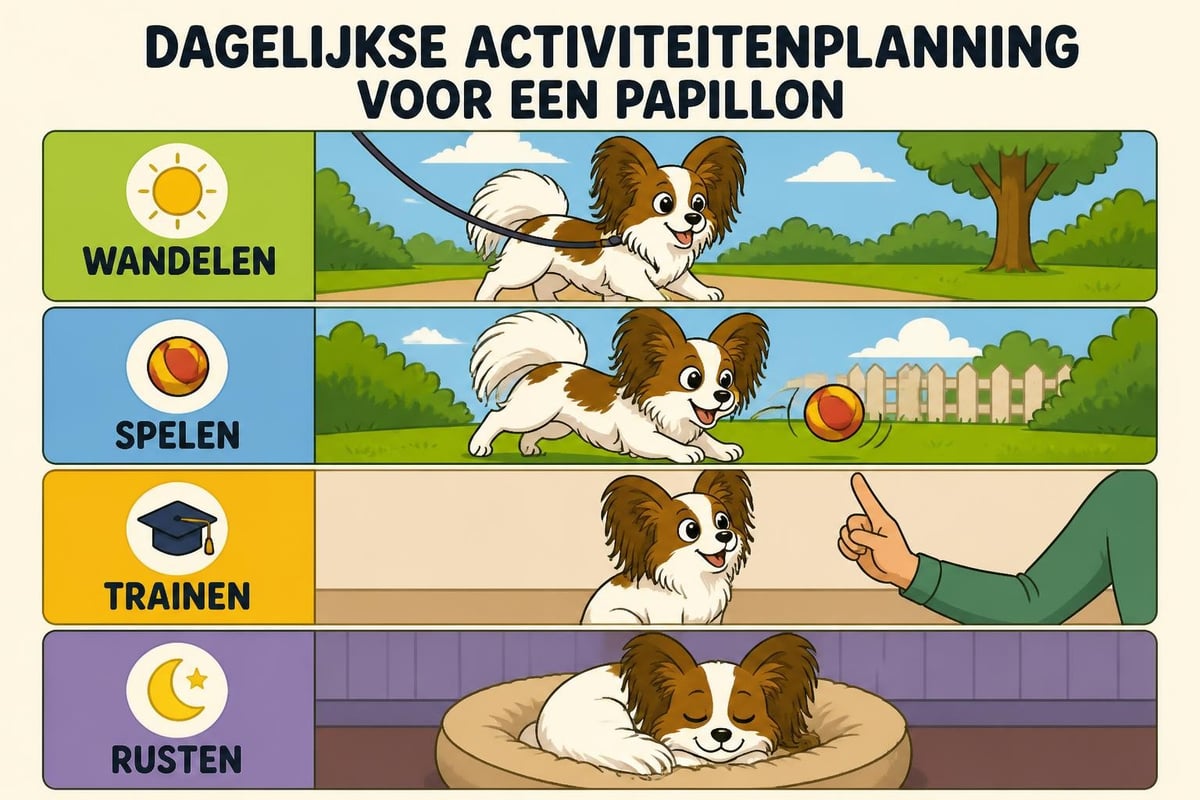
Een papillon heeft verrassend veel energie voor zijn formaat. Twee tot drie wandelingen per dag zijn ideaal, aangevuld met speelsessies en mentale uitdagingen. Deze actieve hondjes houden van:
Korte, levendige wandelingen in de buurt
Puzzelspeelgoed dat hun intelligentie prikkelt
Behendigheidsactiviteiten en trucjes leren
Sociale interactie met andere honden
Verstopspelletjes en zoekactiviteiten
Health through organization
A healthy papillon is a happy papillon. It starts with preventive care and a well-organized approach to health management. Just as you note important dates in a lifeplanner, you should also keep track of your dog's care moments.
Common points of attention
Healthcare
Frequency
Why important
Dental care
Daily
Small dogs are prone to tartar
Veterinarian visit
Twice a year
Preventive checks and vaccinations
Eye check
Weekly
Early detection of problems
Weight check
Monthly
Preventing overweight
With good care a papillon can live 12 to 16 years. That long lifespan means a long-term relationship in which you build routines and create memories together. Each year brings new experiences, but also fixed rituals that enrich life.
The papillon and family life
In a busy household a papillon can play a surprisingly structuring role. These dogs thrive in families with clear routines. They often become the quiet keepers of the daily rhythm: reminding you of regular moments, marking transitions between activities, and bringing order to chaotic days.
Harmony with children and daily routine
Papillons can get along very well with children, provided both parties treat each other with respect. For families with school-age children a natural rhythm often emerges. The dog learns when the children go to school, when they come home, and when it's homework or playtime.
Benefits for family life:
Teaches children responsibility and routine
Encourages outdoor activity through fixed walk times
Provides structure to weekends and holidays
Creates shared care tasks that require planning
The presence of a papillon can make family members more aware of time and planning. When you have a dog that depends on set times for feeding, walking and playing, your daily schedule becomes automatically more detailed. For children this is a valuable lesson in time management.
Training and mental stimulation
The papillon's exceptional intelligence requires regular mental stimulation. These dogs get bored quickly if they don't have enough challenge. Training should therefore not be a chore, but an enjoyable activity that gives structure to your week.
Setting up a training schedule
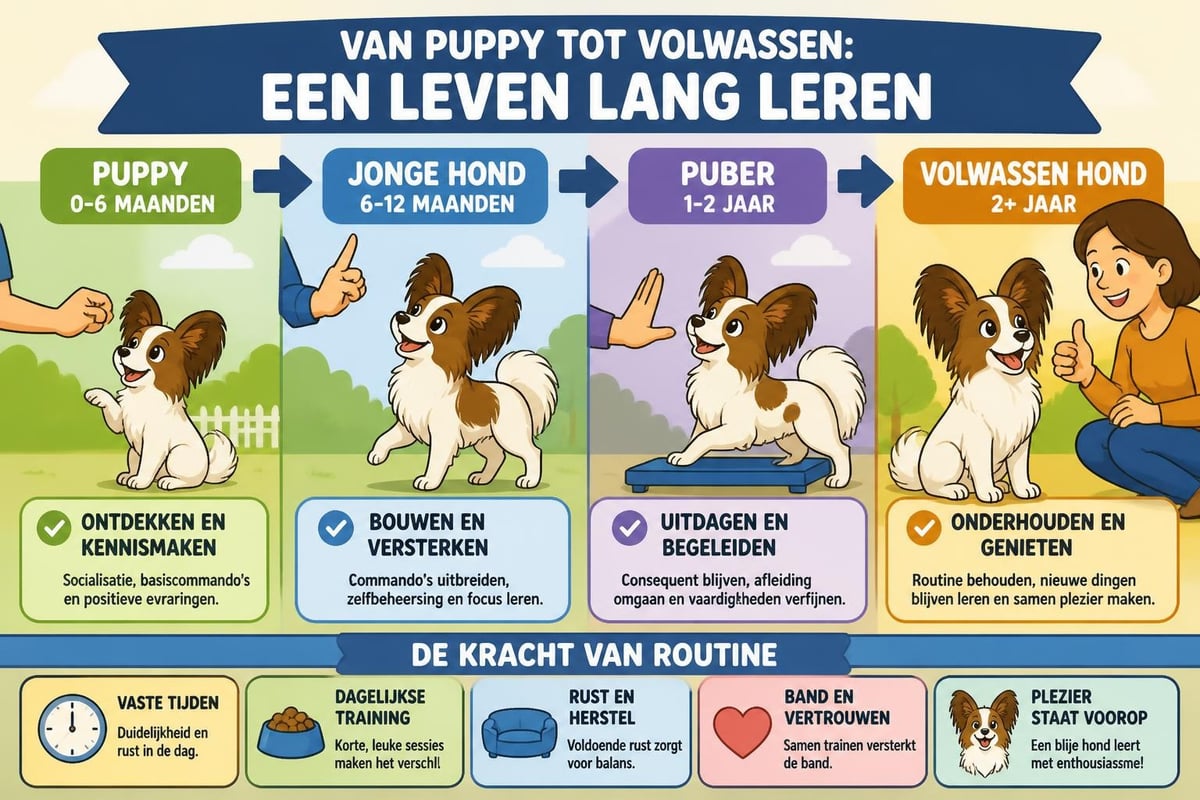
A successful training schedule for a papillon combines short, frequent sessions with varied exercises. Start with five to ten minutes per session, two to three times a day. Increase this gradually as your dog progresses.
Week 1-2: Basic commands (sit, stay, here)
Week 3-4: Leash walking and social skills
Week 5-8: Advanced commands and tricks
Week 9+: Refinement and new challenges
The key is consistency. Use the same commands, reward the same way, and preferably train at fixed times. Papillons thrive on this predictability and make faster progress when they know what to expect.
Nutrition and feeding schedule
A balanced feeding schedule is essential for your papillon's health. These small dogs have a fast metabolism and need regular, nutritious meals. For an adult papillon two meals a day are ideal, spaced at set times.
Feeding guidelines by life stage
A papillon's feeding pattern changes over the years. Puppies need three to four small meals a day. Adult dogs do well on two meals. Senior papillons may benefit from an adjusted feeding schedule depending on their activity level and health.
Daily feeding tips:
Set times: for example 8:00 and 18:00
Fresh water always available
Small portions to prevent overweight
High-quality proteins as a base
Treats as training aids, not main food
A papillon weighs on average 3 to 4.5 kilograms. That sounds little, but for such a small dog every gram matters. Overweight can quickly lead to health problems. That's why it's wise to weigh regularly and adjust portions to activity level.
For active dog owners who also want to stay well hydrated on the go during walks with their papillon, practical solutions are important. Just as your dog always needs fresh water, it's useful to have something on hand yourself during longer hikes.
Seasons and the papillon
The year has different seasons, each with its own challenges for papillon owners. These small dogs with their fine coat are sensitive to extreme temperatures. Good season-by-season planning makes the difference between a comfortable dog and one that struggles with the weather.
Spring: Bloom and activity
In spring everything awakens, including your papillon. This is the season to expand your walking routes, explore new training opportunities, and shake off the winter rut. Be aware: with warmer weather comes tick season. Plan weekly checks after outdoor activities.
Summer: Seeking coolness
Summer requires extra attention for a papillon. These dogs can overheat quickly. Schedule walks in the early morning or late evening. Provide shaded spots and plenty of water. A week planner can help plan the best times for outdoor activities, taking temperature peaks into account.
Season
Key considerations
Activity level
Spring
Tick-borne disease, allergies, coat change
High
Summer
Heat, hydration, protecting paws
Moderate
Autumn
Coat change, increasing darkness
High
Winter
Cold, dry air, limited activity
Moderate
Autumn and winter: Adjustment and comfort
In autumn the major coat change begins. This requires more intensive brushing. Winter brings cold and short days. Papillons can suffer from the cold, especially older individuals. A jacket for walks is not a luxury but a practical necessity. Plan indoor playtime to keep your dog mentally and physically active when it's too cold outside.
The papillon as a travel companion
One of the big advantages of a small dog is travelability. Papillons are excellent travelers when well prepared. Their adaptability and trainability make them ideal companions on adventures, whether it's a weekend getaway or a long vacation.
Preparation is everything
Before traveling with your papillon, thorough planning is essential. Make a checklist of necessities: food, medications, toys, water bowl, travel bowl, leash, vaccination records, and contact details of a veterinarian at your destination. Some papillon owners use a special travel log in their planner to keep track of everything.
Travel essentials for your papillon:
Familiar blanket or bed for a sense of security
Sufficient supply of familiar food
Up-to-date vaccination record and microchip registration
First aid kit for dogs
Photos of your dog in case they get lost
Extra leash and collar with ID tag
Start short car-ride exercises weeks before traveling if your dog isn't used to traveling. Build this up gradually. Most papillons quickly get used to the car if they associate it with positive experiences.
Socialization and the social calendar
A well-socialized papillon is a confident, happy dog. Socialization begins during puppyhood and really continues throughout life. It helps to schedule social activities for your dog, just as you plan social appointments for yourself.
Puppy socialization: The first months
The period between 3 and 14 weeks is crucial for socialization. Plan regular meetings with other dogs, various people, new environments, and diverse situations. This forms the foundation of your papillon’s temperament.
A structured socialization approach can make the difference. Note which experiences your dog has already had and which still need to happen. This prevents gaps in its development and ensures a well-balanced dog comfortable in different situations.
Ongoing social development
Even after puppyhood, social interaction remains important. Schedule weekly playdates with other dogs, visit new locations, and regularly introduce new people. This continuous exposure keeps your papillon socially skilled and confident.
Many papillon owners join local dog clubs or organize regular walking groups. This provides structure and social opportunities for both dog and owner. It becomes a fixed part of your weekly planning, something to look forward to that your dog enjoys.
The papillon and health monitoring
Preventive healthcare requires systematic monitoring. A health logbook for your papillon helps recognize patterns, notice changes, and provide the veterinarian with complete information. This doesn’t need to be complicated, but it should be consistent.
What to monitor
Track your dog’s weight monthly. Note changes in appetite, energy level, or behavior. Keep track of when deworming treatments are given, when vaccinations were administered, and when the next check-up is scheduled. This systematic approach prevents important care moments from being overlooked.
Some owners use a dedicated calendar just for their pet, where all care-related appointments and observations are recorded. This becomes especially valuable as your dog gets older and medical history becomes more important.
The papillon is more than a pet; it is a living lesson in structure, dedication, and the joy of shared routines. This intelligent, cheerful dog thrives in an environment where planning and attention meet with love and playfulness. Whether you are an experienced dog lover or considering your first papillon, the key lies in organization and consistency. At Kalenderwinkel.nl you’ll find a variety of planners and calendars to help you perfectly structure life with your papillon, so every moment with your faithful companion is used to the fullest.