Discover the fascinating story of the German Shepherd — from loyal companion to working dog. Learn all about temperament, history, and care.
Er zijn weinig hondenrassen die zo veelzijdig, trouw en indrukwekkend zijn als de Duitse herder. Dit ras heeft zich door de decennia heen ontwikkeld van werkende herdershond tot een van de meest geliefde gezinshonden ter wereld. Het verhaal van de Duitse herder is er een van intelligentie, toewijding en onvoorwaardelijke loyaliteit. Of je nu overweegt om een Duitse herder in je gezin op te nemen, of je simpelweg gefascineerd bent door dit bijzondere ras, hun geschiedenis en kenmerken vertellen een verhaal dat de moeite waard is om te delen.
De oorsprong en geschiedenis van de Duitse herder
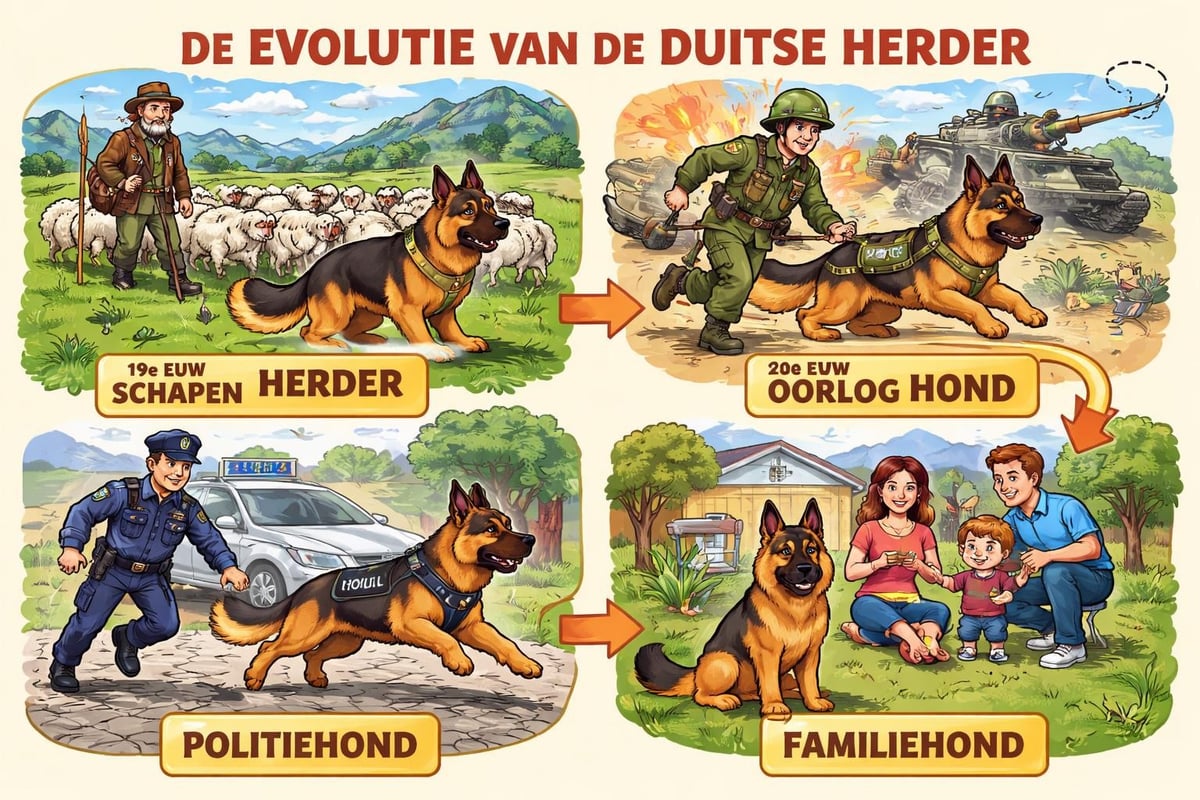
Het verhaal van de Duitse herder begint in het Duitsland van de negentiende eeuw. Max von Stephanitz, een voormalig cavaleriekapitein, had een droom: het creëren van de perfecte herdershond. In 1899 bezocht hij een hondenshow waar hij een hond zag die zijn ideaalbeeld belichaamde. Deze hond, oorspronkelijk Hektor Linksrhein genaamd, werd de eerste officieel geregistreerde Duitse herder onder de nieuwe naam Horand von Grafrath.
Von Stephanitz richtte de Verein für Deutsche Schäferhunde op, de eerste vereniging gewijd aan dit ras. Zijn visie was helder: een werkende hond met uitzonderlijke intelligentie, fysieke capaciteiten en een stabiel karakter. Hij selecteerde zorgvuldig fokdieren op basis van functionaliteit in plaats van alleen uiterlijk.
Van herder tot held
Tegen de tijd dat de Eerste Wereldoorlog uitbrak, had de Duitse herder al naam gemaakt als uitstekende werkhond. Tijdens de oorlog dienden deze honden in verschillende rollen:
Boodschappenhonden die berichten bezorgden tussen loopgraven
Bewakers die kampen en posities beschermden
Reddingshonden die gewonde soldaten opspoorden
Assistenten die munitie en medische voorzieningen transporteerden
Na de oorlog brachten soldaten verhalen mee naar huis over de moed en intelligentie van deze honden. Dit leidde tot een explosie in populariteit, vooral in Amerika en Engeland, waar het ras echter tijdelijk "Alsatian" werd genoemd vanwege anti-Duitse sentimenten.
Karakter en temperament van de Duitse herder
De Duitse herder wordt gekenmerkt door zijn loyaliteit, maar er is zoveel meer dat dit ras zo bijzonder maakt. Het karakter van een Duitse herder is een zorgvuldig samengesteld palet van eigenschappen die hem zowel geschikt maken als werkhond én als gezinslid.
Intelligence and trainability
German Shepherds are known for their exceptional intelligence. They rank among the top three most intelligent dog breeds in the world, which means that they:
Pick up new commands quickly - They often understand a new command after only a few repetitions
Show problem-solving ability - They can independently devise solutions to challenges
High work ethic - They want to please their owner and enjoy tasks
This intelligence makes training a pleasure, but also requires mental stimulation. A bored German Shepherd can develop destructive behavior.
Loyalty and protective instinct
The protective instinct of a German Shepherd is deeply rooted in their DNA. They form strong bonds with their family and are naturally vigilant. This makes them excellent guard dogs, but also requires early socialization to prevent them from becoming overly suspicious of strangers.
Trait
Level
Description
Loyalty
Very high
Forms deep bonds with family members
Protective instinct
High
Alert without being overly aggressive
Patience with children
Average to high
Excellent with own-family children when properly socialized
Energy
Very high
Needs a lot of exercise and stimulation daily
Trainability
Exceptionally high
Learns quickly and likes to be active
Physical characteristics and care
The German Shepherd is a medium to large dog with an athletic, powerful build. Males typically weigh between 30 and 40 kilograms, while females are slightly lighter, between 22 and 32 kilograms. Their coat is usually medium-length with a dense undercoat, although long-haired varieties also exist.
Grooming needs
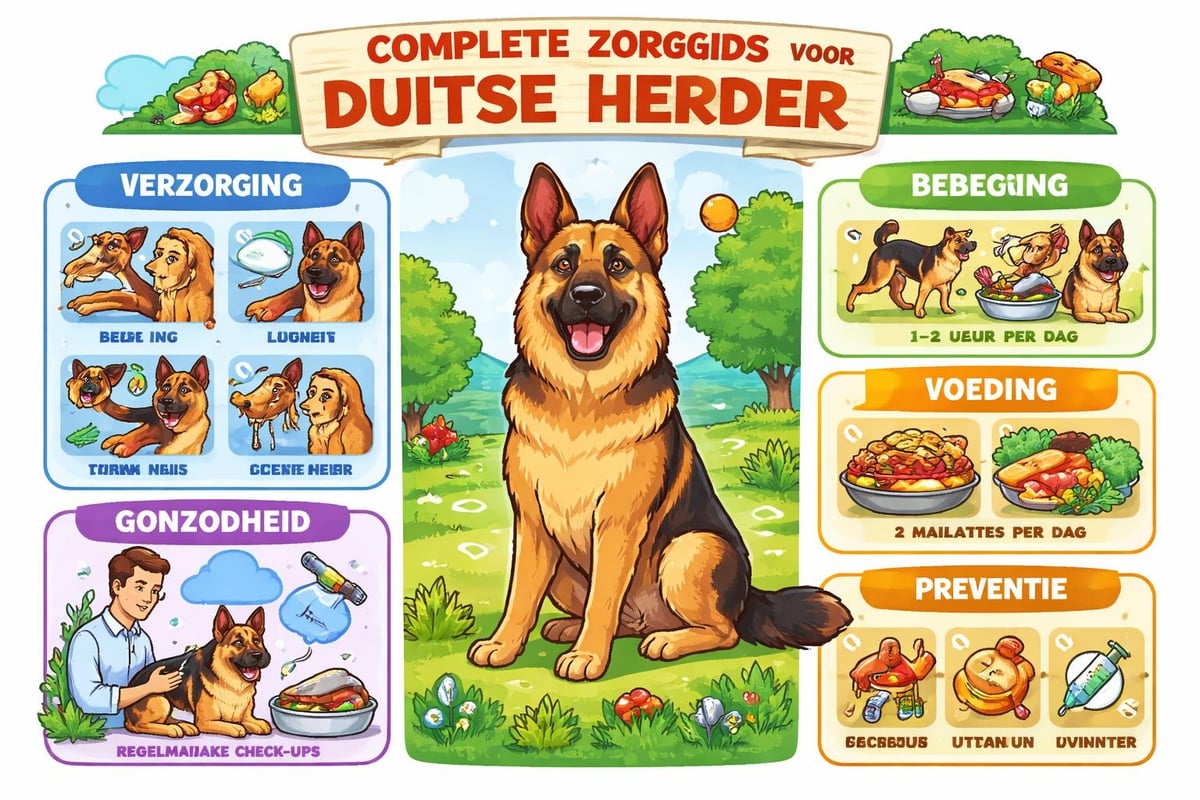
Grooming a German Shepherd requires regular attention. Their double coat protects them from various weather conditions, but also means they shed regularly, especially during seasonal changes.
Minimal grooming routine:
Brush at least twice a week (daily during shedding seasons)
Bathe only when necessary; bathing too often can disrupt natural oils
Check ears weekly for signs of irritation or infection
Trim nails regularly
Brush teeth several times a week
Their nutrition is also important. German Shepherds can be sensitive to certain dietary components, so a high-quality food tailored to their activity level is essential.
The German Shepherd as a working dog
While many people know a German Shepherd as a pet, this breed continues to excel in various working roles. Their combination of intelligence, trainability, and physical abilities makes them ideal for demanding tasks.
Police and security work
Police forces worldwide rely on German shepherds for their versatility. They are deployed for:
Drug detection and finding explosives
Tracking and locating missing persons
Apprehending and deterring suspects
Search and rescue operations after disasters
Their ability to focus in stressful situations and their natural protective instinct make them indispensable for these roles.
Assistance and therapy dogs
In addition to their work in security, German shepherds also serve as assistance dogs for people with disabilities. Their calm temperament, intelligence and strong work ethic make them suitable as:
Guide dogs for the blind and visually impaired
Service dogs for people with physical disabilities
Therapy dogs in care facilities and schools
PTSD assistance dogs for veterans and trauma survivors
It's fascinating to see how a breed originally bred for herding sheep now saves and improves lives in so many different contexts.
Training and socialization of a German shepherd
Training a German shepherd begins at a young age. Puppies are like sponges that absorb everything, and the first months are crucial for their development into well-adjusted adult dogs.
Socialization in the puppy phase
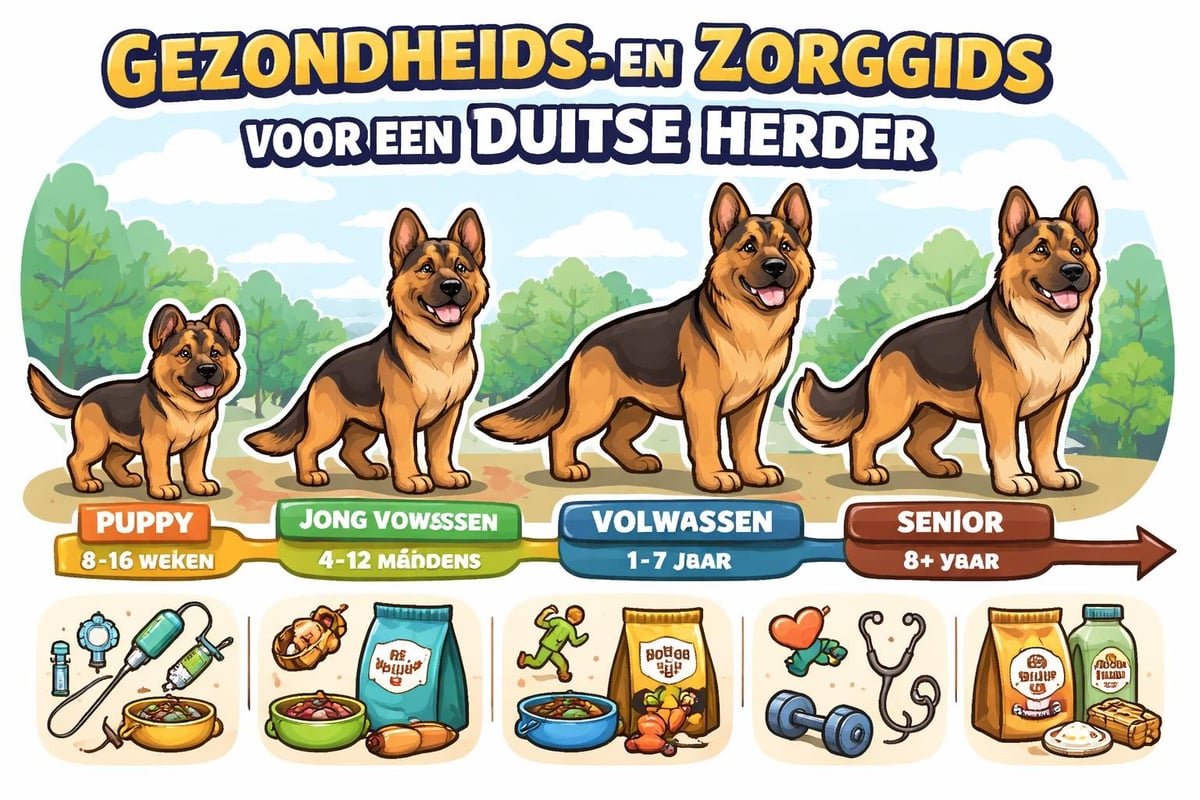
Between 8 and 16 weeks puppies go through a critical socialization period. During this time they should be exposed to:
Different people of all ages and backgrounds
Other dogs and pets
Diverse environments (cities, parks, beaches)
Different sounds and experiences
Car rides and transport
This early exposure helps prevent fear and aggression from developing later. The temperament of the German shepherd is largely formed during these crucial weeks.
Basic obedience and beyond
German shepherds thrive on structure and consistency. A training plan should begin with basic commands such as sit, stay, come, and walking at heel. But their intelligence allows you to go much further.
Training level
Skills
Time investment
Basic
Sit, down, stay, come, walk on leash
10–15 minutes per day, 8–12 weeks
Advanced
Distance commands, staying with distractions, retrieving objects
20–30 minutes per day, 3–6 months
Expert
Tracking, off-leash obedience, complex tasks
Continuous training, 6+ months
Positive reinforcement works best with this breed. They want to please but can be sensitive to harsh corrections. Rewarding with treats, toys, and praise motivates them to do their best.
Health and wellbeing
Like all purebred dogs, German Shepherds have certain health risks owners should be aware of. Breed-specific conditions occur, but with proper care and prevention most German Shepherds can live long, healthy lives.
Common health problems
Hip and elbow dysplasia are the best-known issues in this breed. These conditions occur when joints do not develop properly, leading to arthritis and pain. Responsible breeders screen their dogs for these conditions.
Degenerative myelopathy is a progressive neurological disease that occurs mainly in older German Shepherds. It begins with weakness in the hind legs and can eventually lead to paralysis.
Gastric dilatation-volvulus (bloat) is a life-threatening condition in which the stomach fills with gas and twists. This requires immediate veterinary attention.
Preventive measures help:
Choose a responsible breeder who performs health screenings
Keep your dog at a healthy weight
Avoid strenuous exercise immediately after meals
Schedule regular veterinary check-ups
Watch for early warning signs of health problems
The German Shepherd as a family dog
Although German Shepherds excel as working dogs, they are also fantastic family members. Their loyalty and protective nature make them natural guardians of their human pack, while their playful side makes them fun companions.
Suitable for which families?
Not every family is suitable for a German Shepherd. These dogs require:
Time for training and exercise - At least 1–2 hours per day of physical and mental activity
An active lifestyle - They fit best with people who enjoy walking, running, or playing sports
Consistent leadership - They need clear boundaries and rules
Space to move - While they can adapt to smaller homes, they thrive best with access to a yard
Families with children can be great matches, provided the dog is well socialized. German Shepherds can be patient and gentle with children in their own household, but supervision is always important, especially with young children.
Living with other pets
The personality of the German Shepherd makes living with other pets certainly possible, but it requires the right introductions and socialization. Dogs raised with cats or other pets from puppyhood usually accept them as part of the family.
Their herding instinct can sometimes show up as "gathering" children or other pets, which can be cute but also needs to be managed so it doesn't become overbearing.
The German Shepherd in the modern world
In 2026 the German Shepherd remains one of the most popular dog breeds worldwide. Their adaptability has helped them stay relevant in a changing world. From rural farms to urban apartments, from police units to family homes, they find their place everywhere.
Modern challenges and opportunities
The breeding of German Shepherds has evolved, with increasing attention to health and temperament alongside appearance. Enthusiasts and breeders work together to keep the breed healthy and functional.
There is also growing awareness of the importance of mental stimulation. Modern owners provide their German Shepherds with challenging activities such as:
Nose work and tracking sports
Agility and obedience competitions
Herding trails for dogs that want to use their original instincts
Interactive toys and puzzles for mental challenge
The connection between planning and dog ownership
Owning a German Shepherd requires planning and organization. Vet appointments, training sessions, feeding schedules, and grooming routines all need to be tracked. Many owners find a well-organized system essential for managing their responsibilities.
Keeping track of your dog's health history, training progress, and daily routine in an organized format can reduce stress and ensure nothing is overlooked. Whether you choose a digital system or a more traditional pen-and-paper approach, structure helps when caring for such an intelligent and demanding dog.
Routine and consistency
German Shepherds thrive on routine. They are happier and better adjusted when they know what to expect. This means:
Set feeding times - The same times every day help digestion and predictability
Consistent walking schedules - Regular exercise at set times
Structured training times - Short, daily sessions at the same time
Rest periods - Even active dogs need downtime
Planning these activities not only helps your dog, but also you as an owner to find a healthy balance between dog care and other life obligations.
The emotional bond with a German Shepherd
The story of every German Shepherd owner is unique, but there are common themes. The bond you form with a German Shepherd is intense and profound. These dogs give themselves completely to their people, and that dedication is often reflected in the loyalty owners feel in return.
People often describe their German Shepherds not just as pets, but as family members, partners and even therapists. Their ability to read and respond to human emotions is remarkable. The temperament and abilities of this breed create a unique bond that goes beyond the typical human-dog relationship.
They are there for you on good days and bad. They celebrate with you when you're happy and comfort you when you're sad. This emotional intelligence is one of the reasons so many people who have owned a German Shepherd once never consider another breed.
Stories of loyalty
There are countless stories of German Shepherds who save, protect or support their owners in difficult times. From dogs that detect medical emergencies to those who literally risk their lives to protect their family, these stories illustrate the extraordinary dedication of the breed.
But the everyday moments are just as valuable: the dog that patiently waits by the door until you come home, the soft head that rests on your lap after a long day, the enthusiastic greeting every morning. These small moments together form the deeper relationship that makes life with a German Shepherd so enriching.
Life with a German Shepherd is an adventure full of loyalty, intelligence and unconditional love. Whether you keep track of your dog's routine or organize your own busy schedule, good planning makes the difference. At Kalenderwinkel.nl you'll find a wide range of calendars and planners for 2026 to help you keep track of all the important moments with your four-legged friend. With convenient payment options and reliable shipping via PostNL, DHL or UPS, you can easily find your perfect planning aid.