Discover the KenKen puzzle: an addictive blend of mathematical challenge and logical thinking. Perfect for daily training in 2026!
Er gaat niets boven het gevoel wanneer je eindelijk dat ene cijfer op de juiste plek krijgt. Die voldoening, dat moment van heldere inzicht, dat is waar puzzelaars voor leven. De kenken puzzel biedt precies dat gevoel, keer op keer. Het is een puzzel die je hersenen écht aan het werk zet, waar rekenen en logisch denken samenkomen in een fascinerende dans van cijfers. In 2026 blijft deze Japanse uitvinding razend populair, niet alleen bij wiskundeleraren en puzzelfanaten, maar ook bij mensen die simpelweg op zoek zijn naar een dagelijkse mentale workout.
Wat is een kenken puzzel precies?
Een kenken puzzel is veel meer dan zomaar een cijferspel. Het is een wiskundige puzzel die in 2004 werd uitgevonden door de Japanse wiskundeleraar Tetsuya Miyamoto. De naam "KenKen" komt van het Japanse woord "kenkagaku", wat staat voor slimheid of kennis. De puzzel combineert de regels van sudoku met wiskundige bewerkingen, waardoor er een unieke en verslavende uitdaging ontstaat.
Het bord bestaat uit een rooster, meestal 4x4, 5x5, of 6x6 vakjes. In elk vakje moet je een cijfer plaatsen volgens strikte regels. Geen enkel cijfer mag dubbel voorkomen in dezelfde rij of kolom. Tot zover lijkt het op sudoku, maar hier stopt de vergelijking.
De unieke wiskundige component
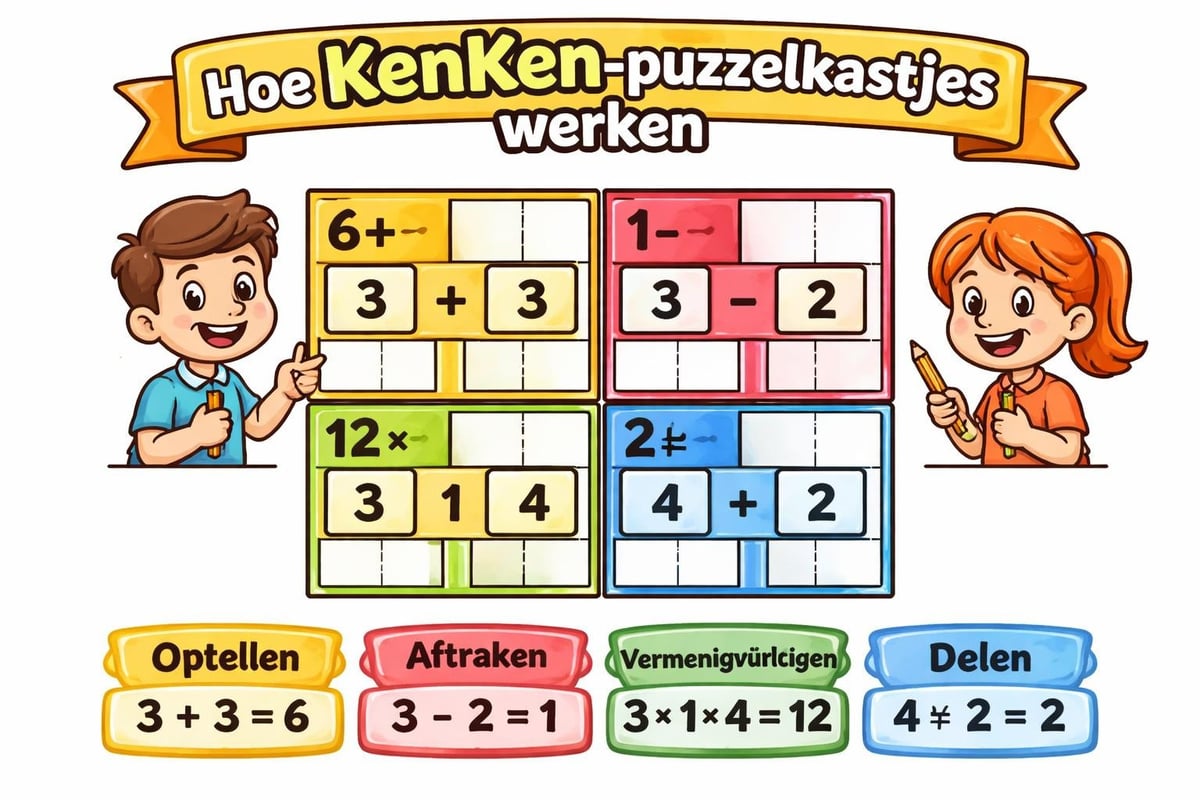
Wat de kenken puzzel onderscheidt zijn de zogenaamde "cages". Dit zijn groepjes vakjes die zijn omlijnd met dikke lijnen. Elke cage heeft een doelcijfer en een wiskundige bewerking. De cijfers binnen die cage moeten, wanneer je de aangegeven bewerking toepast, het doelcijfer opleveren.
Voorbeelden van cage-regels:
"12+" betekent dat de cijfers in die cage bij elkaar opgeteld 12 moeten zijn
"2÷" betekent dat het ene cijfer gedeeld door het andere 2 moet opleveren
"6×" betekent dat de cijfers vermenigvuldigd 6 moeten zijn
"3-" betekent dat het verschil tussen de cijfers 3 moet zijn
De volgorde waarin je de cijfers gebruikt bij aftrekken of delen maakt niet uit. Je mag ze omdraaien om tot het doelcijfer te komen.
Waarom de kenken puzzel zo verslavend werkt
Er is iets magisch aan een puzzel die je op meerdere niveaus uitdaagt. Bij een kenken puzzel train je niet alleen je logisch denkvermogen, maar ook je rekenvaardigheid. Het is breingymnastiek in zijn beste vorm.
Mentale voordelen die wetenschappelijk zijn onderbouwd
According to the International KenKen Puzzle Federation, regularly doing puzzles helps strengthen memory and develop cognitive skills. This makes the puzzle especially suitable for both children and adults who want to keep their minds sharp.
Scientifically supported mental benefits
There is something magical about a puzzle that challenges you on multiple levels. With a KenKen puzzle you not only train your logical thinking, but also your arithmetic skills. It’s brain gymnastics at its best.
Why the KenKen puzzle is so addictive
KenKen puzzle cage structure
The order in which you use the numbers for subtraction or division does not matter. You may reverse them to reach the target number.
means that the difference between the numbers must be 3
“6×” means the numbers must multiply to 6
“2÷” means one number divided by the other must equal 2
“12+” means the numbers in that cage must add up to 12
Examples of cage rules:
What sets the KenKen puzzle apart are the so-called “cages.” These are groups of cells outlined with thick lines. Each cage has a target number and a mathematical operation. The numbers within that cage must, when you apply the indicated operation, produce the target number.
The unique mathematical component
The board consists of a grid, usually 4x4, 5x5, or 6x6 cells. In each cell you must place a number according to strict rules. No number may appear twice in the same row or column. So far it may resemble Sudoku, but that’s where the comparison ends.
A KenKen puzzle is much more than just a numbers game. It’s a mathematical puzzle invented in 2004 by Japanese math teacher Tetsuya Miyamoto. The name “KenKen” comes from the Japanese word “kenkagaku,” which stands for cleverness or knowledge. The puzzle combines Sudoku rules with mathematical operations, creating a unique and addictive challenge.
What exactly is a KenKen puzzle?
There’s nothing like the feeling when you finally place that one number in the right spot. That satisfaction, that moment of clear insight, is what puzzlers live for. The KenKen puzzle delivers exactly that feeling, time and again. It’s a puzzle that really gets your brain working, where arithmetic and logical thinking come together in a fascinating dance of numbers. In 2026 this Japanese invention remains hugely popular, not only among math teachers and puzzle enthusiasts but also among people simply looking for a daily mental workout.
Main cognitive benefits:
Verbeterd rekenkundig inzicht
Grotere mentale flexibiliteit
Verhoogde concentratie en focus
Ontwikkeling van probleemoplossend denken
Versterking van het werkgeheugen
De puzzel is zo gestructureerd dat je niet kunt raden. Elke stap vereist logische deductie. Dit maakt het een perfecte training voor je hersenen, vergelijkbaar met hoe fysieke oefening je spieren traint.
Hoe los je een kenken puzzel op?
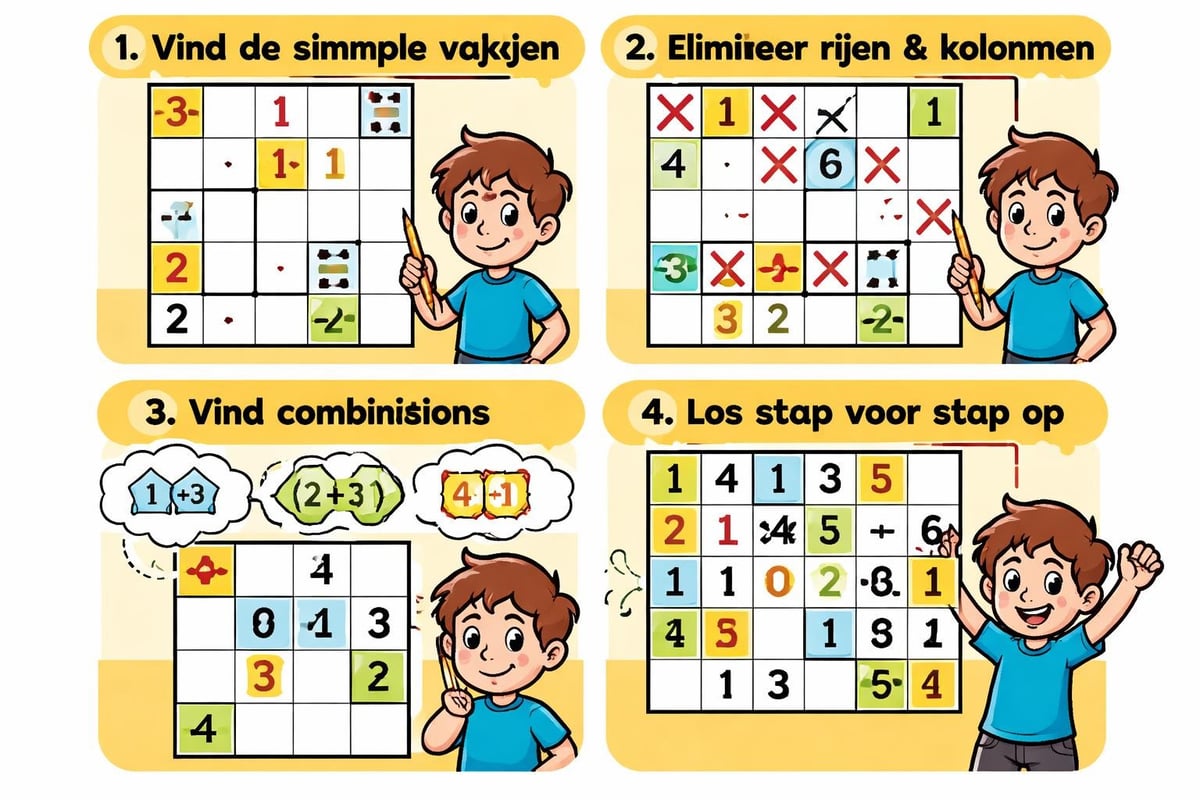
Het oplossen van een kenken puzzel vereist een systematische aanpak. Je kunt niet lukraak cijfers invullen en hopen dat het goed komt. Je hebt een strategie nodig.
Stap 1: Begin met de makkelijke cages
Sommige cages zijn eenvoudiger op te lossen dan andere. Een cage met slechts één vakje geeft je meteen het antwoord. Een cage met twee vakjes en een eenvoudige bewerking is ook een goed startpunt.
Stel je hebt een 4x4 rooster met cijfers 1 tot en met 4. Een cage met "2÷" en twee vakjes kan alleen maar 4 en 2, of 2 en 1 bevatten. Dat zijn je mogelijkheden, en die beperkingen helpen je verder.
Stap 2: Gebruik rij- en kolomregels
Onthoud dat elk cijfer maar één keer per rij en kolom mag voorkomen. Als je al weet dat ergens in een rij een 3 staat, dan kunnen alle andere vakjes in die rij geen 3 meer zijn. Dit lijkt vanzelfsprekend, maar het is je krachtigste hulpmiddel.
Strategie
Wanneer toepassen
Effectiviteit
Start met enkelvoudige cages
Direct aan het begin
Zeer hoog
Elimineer onmogelijke cijfers per rij/kolom
Gedurende het hele proces
High
Werk met de kleinste cages eerst
Vroeg in de puzzel
High
Zoek naar unieke combinaties
Bij lastige momenten
Gemiddeld
Gebruik potloodnotaties
Wanneer meerdere opties mogelijk zijn
Zeer hoog
Stap 3: Denk in mogelijkheden
Bij complexere cages moet je soms alle mogelijke combinaties overwegen. Een cage met "12+" en drie vakjes in een 6x6 rooster kan 6+5+1, 6+4+2, of 5+4+3 zijn. Schrijf deze mogelijkheden klein in de vakjes (met potlood of in gedachten) en elimineer ze stapsgewijs door andere beperkingen.
Kenken puzzels voor verschillende niveaus
Een van de mooiste aspecten van de kenken puzzel is de schaalbaarheid. Er zijn puzzels voor absolute beginners en voor doorgewinterde experts die een serieuze uitdaging zoeken.
Beginnersniveau: 3x3 en 4x4 roosters
Voor mensen die net beginnen met kenken puzzels zijn kleinere roosters ideaal. Een 3x3 rooster met cijfers 1 tot en met 3 is perfect om de basisregels te leren kennen. De bewerkingen blijven eenvoudig, meestal alleen optellen en aftrekken.
Educational websites such as KlasKement offer excellent introductory puzzles for students. These rekendoku puzzles help children develop their math skills through play.
Advanced level: 6x6 and larger
Once you have mastered the basics, it's time for bigger challenges. A 6x6 grid with all four operations (addition, subtraction, multiplication, division) really requires strategic thinking.
The cages become more complex, sometimes with four or five cells per cage. This means your mental arithmetic is put to the test. Which combinations of five numbers multiplied together give 120? Those are serious brainteasers.
Average puzzles: 5x5 or 6x6 grids, all four operations, average cage size
Expert puzzles: 6x6 or larger, complex cages, difficult combinations, minimal starting information
The KenKen puzzle in daily life in 2026
In 2026 the KenKen puzzle has grown into much more than a pastime. It has become a daily routine for people who want to keep their minds sharp. Just as some people start with a cup of coffee, puzzlers start their day with a KenKen puzzle.
Why a puzzle calendar is the perfect tool
Imagine: a new challenge every day, neatly presented on your desk or kitchen table. A puzzle calendar not only brings structure to your day but also a constant source of mental stimulation.
At Kalenderwinkel.nl you'll find various calendars that pair perfectly with a daily puzzle routine. Although there are no specific KenKen puzzle calendars available, a desk calendar or daily planner provides the perfect place to schedule your daily puzzle session and track your progress.
Combine puzzling with planning
The routine of puzzling can wonderfully complement organizing your day. Start your morning with a KenKen puzzle while your coffee cools. Those ten to fifteen minutes of mental warm-up get your brain ready for the day's challenges.
Making KenKen puzzles: from user to creator
Once you become addicted to solving KenKen puzzles, you often get the desire to create your own. Creating a good puzzle is an art form in itself.
The basic principles of puzzle construction
A good KenKen puzzle has a unique solution. This means each number can only go in exactly one place when you apply all the rules. Creating such a puzzle requires backwards engineering.
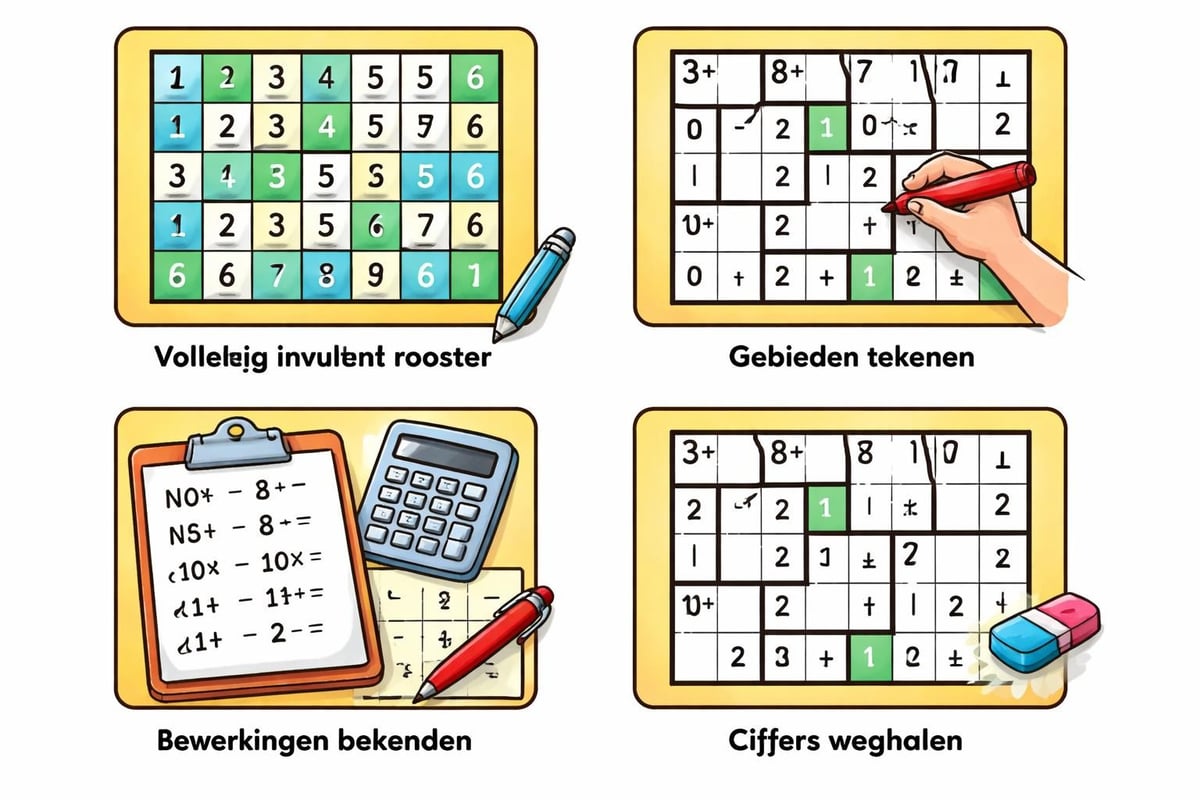
Step-by-step plan for making a KenKen puzzle:
Fill an empty grid with numbers according to the row and column rules
Draw cages around groups of numbers
Calculate the target number for each cage
Remove the filled-in numbers
Test whether the puzzle is solvable with a unique solution
This process sounds simpler than it is. Creating a challenging but fair puzzle requires experience and patience.
Why creating puzzles makes you a better solver
By constructing puzzles yourself you gain deeper insight into the mechanics. You begin to recognize patterns and develop strategies you wouldn’t see as a solver. It’s similar to how chess players get stronger by analyzing games.
KenKen puzzles in education and development
Schools around the world have discovered the value of KenKen puzzles as an educational tool. It’s not just entertainment; it’s targeted skills development packaged as a game.
Making math skills accessible
Children who struggle with traditional math instruction often thrive with KenKen puzzles. The game-like setup makes arithmetic less threatening and more inviting. Instead of boring sums, you solve a mystery.
Websites such as W4Kangoeroe show how mathematical puzzles can be used for educational purposes. Although they focus on other puzzle types, the principle is the same: learning through challenge and fun.
Educational benefit
Traditional arithmetic
KenKen puzzle
Engagement
Low to medium
High
Independent learning
Possible
Stimulated
Problem-solving thinking
Limited
Central
Immediate feedback
Dependent on teacher
Built-in
Differentiation
Challenging
Of course
Developing perseverance
A KenKen puzzle gives up, you must persevere. This teaches children (and adults) a valuable lesson: complex problems require patience and systematic thinking. You can’t jump to the solution; you must work toward it step by step.
Variations and extensions of the classic KenKen puzzle
The basic version of the KenKen puzzle is already challenging enough, but there are countless variations that add extra dimensions to the puzzle experience.
KenKen with inequality symbols
In this variant some cages contain no mathematical operation but a greater-than or less-than symbol between two cells. This adds an extra layer of logic to the puzzle. You must not only calculate but also compare and relate.
Chain KenKen: multiple connected grids
For the ultimate challenge there are chain KenKen puzzles where multiple grids are connected. Certain cells share values between grids, forcing you to unravel a network of logical connections.
Interesting variations:
No-op KenKen: Cages without a specified operation; you must figure out which operation is used
Diagonal KenKen: Extra rule that numbers also must not repeat on the diagonals
Odd-Even KenKen: Some cells are marked as even or odd
Prime KenKen: Special marking for prime numbers
The psychology behind puzzle addiction
Why can some people work on a KenKen puzzle for hours? The psychology behind puzzle addiction is fascinating and has everything to do with how our brain processes rewards.
The dopamine rush of solving
Each time you place a number correctly, your brain releases a small burst of dopamine. This is the same neurotransmitter released during other satisfying activities. The KenKen puzzle is essentially a series of small victories leading to a big triumph.
The interesting thing is that the difficulty is exactly right. Not so easy that it becomes boring, not so hard that it becomes frustrating. This "flow state" is what brings people back to the puzzle, day after day.
Control and predictability in a chaotic world
In 2026, with all the uncertainty in the world, puzzles offer something valuable: a problem with a guaranteed solution. There is always an answer; you just have to find it. That certainty is calming and gives a sense of control.
As NEMO Kennislink explains, puzzles can help us unravel complex problems by thinking systematically. This skill has value far beyond the puzzle itself.
Tips for improving your KenKen puzzle skills
Want to get really good at KenKen puzzles? Here are strategies experienced puzzlers use to take their skills to the next level.
Develop a mental toolbox
Experienced solvers have an arsenal of techniques they can apply flexibly. These aren't tricks, but systematic approaches you can learn and perfect.
Essential techniques:
Scanning: Systematically check each row and column for possibilities
Cross-hatching: Eliminate cells by identifying row and column conflicts
Cage analysis: Work through all possible combinations for a cage
What-if scenarios: Hypothetically place a number and see if it leads to conflicts
Practice daily, but vary
Consistent puzzling is the key to improvement, but vary difficulty levels. Start your day with an easier puzzle to warm up, then try a harder one. This variation keeps your brain sharp and prevents boredom.
A day calendar can help keep this routine. Mark every day you solve a puzzle, and you'll be amazed at your progress over weeks and months.
Community and competition around KenKen puzzles
Puzzling doesn’t have to be a solo activity. There’s a vibrant global community of KenKen puzzle enthusiasts who share their passion.
Online communities and forums
Websites and forums bring puzzlers together to exchange strategies, discuss difficult puzzles, and share new variations. These communities are incredibly supportive and welcome both beginners and experts.
As Koen's puzzle page shows, explanation and collaboration can help unravel complex puzzles. Solving together can yield insights you might never have found on your own.
Competitions and championships
For the competitively minded solvers there are annual championships where the best solvers from around the world compete against each other. These events measure not only accuracy but also speed, which adds an extra dimension to the challenge.
KenKen puzzles and mindfulness
There’s an unexpected link between puzzling and mindfulness. When you become fully absorbed in a KenKen puzzle, you reach a state of focused attention that has much in common with meditation.
Being present in the moment
When working on a puzzle you are fully in the now. You don’t worry about yesterday or tomorrow; you’re focused on this number, this cage, this logical step. That mental calm is valuable in our always-on culture.
Many people use their daily puzzle session as a form of digital detox. No screens, no notifications, just paper and pencil (or pen for the brave). This break from constant connectivity is mentally refreshing.
Training focus and concentration
In an age where our attention span is getting shorter, the ability to concentrate is a superpower. KenKen puzzles train exactly that skill. You learn to ignore distractions and focus fully on the task in front of you.
A KenKen puzzle offers the perfect balance of challenge and satisfaction, and trains your brain in a way that is both fun and effective. Whether you start with a simple 3x3 grid or tackle a complex 6x6 expert-level puzzle, the journey is worth it. For those who want structure for this daily mental training, a solid calendar provides the perfect support to keep track of your puzzle routine and monitor your progress. At Kalenderwinkel.nl you’ll find a wide selection of calendars for 2026 that can help you organize your day, including your daily puzzle time. Whether you choose a desk calendar, wall calendar, or daily planner, there’s always a perfect match for your puzzle routine.