Discover the fascinating world of skulls in art, culture, and design. From historical meanings to modern uses in calendars and decoration.
Throughout the centuries, humans have had a special fascination with skulls. These remarkable bones, which once protected our thoughts and senses, have grown into powerful symbols in art, culture, and design. From the memento mori tradition in European painting to the colorful sugar skulls of Mexican festivities, skulls tell stories that go beyond their anatomical function. I'll take you on a journey through the fascinating world of this iconic symbol that still holds a prominent place in our visual culture, from tattoos to calendar designs and from fashion to interior design.
The historical significance of skulls through the centuries
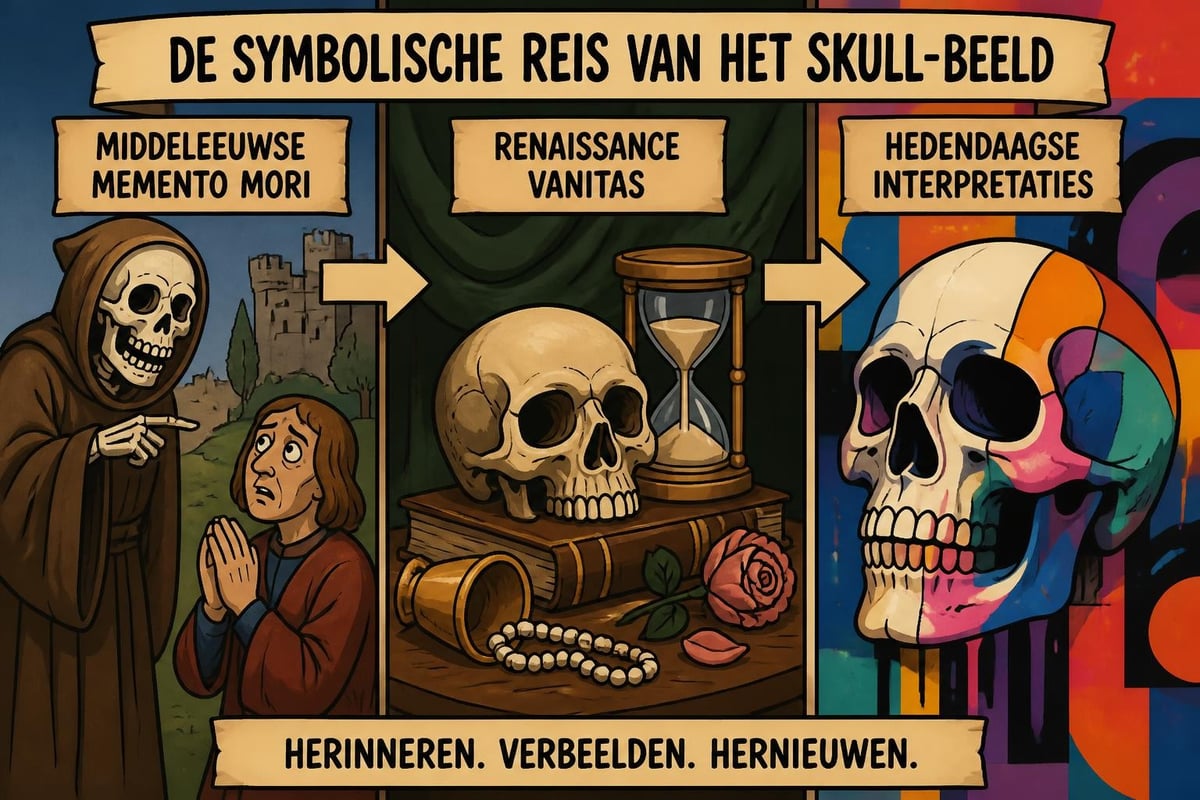
In medieval Europe, the depiction of skulls had a deep spiritual meaning. Artists integrated these symbols into their work as a reminder of life's transience, a concept known as "memento mori" or "remember that you will die." This tradition was not meant to instill fear, but rather to inspire people to make the most of their lives.
Skulls in religious art
The Catholic Church embraced the use of skulls in religious paintings and sculptures. Saints were often depicted holding a skull during their meditations, a symbol of contemplation on earthly existence. In monastery libraries and chapels, skulls were a fixed part of the decoration, strategically placed to remind monks and nuns of their spiritual aims.
The Flemish Masters were particularly skilled at depicting skulls with almost photographic accuracy:
Hans Memling integrated subtle skull motifs into portraits
Pieter Bruegel the Elder used skulls as allegorical elements
Rogier van der Weyden placed skulls in religious scenes as symbols of penance
The scientific revolution and anatomical drawings
By the time the Renaissance reached its height, skulls acquired a new meaning. Anatomists like Andreas Vesalius created detailed drawings of the human skull, documenting every little bone and opening precisely. These scientific images were as artistic as they were informative.
Anatomical studies transformed our view of skulls from merely symbolic objects into wondrous examples of natural design. Artists studied these drawings to make their portraits more realistic, while physicians used them as teaching material.
Skulls in world cultures and traditions
Verschillende culturen hebben unieke relaties ontwikkeld met het symbool van de schedel. Wat in de ene cultuur als onheilspellend wordt gezien, kan in een andere traditie een teken van viering en vreugde zijn.
Mexicaanse Día de los Muertos
De Mexicaanse Dag van de Doden heeft de manier waarop we naar schedels kijken compleet getransformeerd. De kleurrijke calaveras, of suikerschedels, worden versierd met levendige kleuren, bloemmotieven en ingewikkelde patronen. Deze vrolijke representaties vieren het leven van overledenen in plaats van te rouwen om hun verlies.
Cultuur
Betekenis Schedel
Traditioneel Gebruik
Mexico
Viering van voorouders
Día de los Muertos decoraties
Tibet
Spirituele transformatie
Rituele objecten en kunstwerken
Europa
Vergankelijkheid
Kunstwerken en symbolen
Polynesië
Bescherming en kracht
Tatoeages en stamkunst
Families creëren altaren met calaveras en foto's van geliefde overledenen, waarbij de schedels functioneren als blijde herinneringen aan het leven dat werd geleefd. Deze traditie heeft wereldwijd invloed gehad op kunst en design, inclusief kalendermotieven die deze kleurrijke esthetiek omarmen.
Aziatische interpretaties
In het Tibetaans boeddhisme spelen schedels een belangrijke rol in meditatiepraktijken. De kapala, een rituele schedelbeker, symboliseert de transformatie van onwetendheid naar wijsheid. Deze objecten zijn vaak rijk versierd met edelstenen en metalen, waardoor ze kunstwerken op zich worden.
Moderne toepassingen in design en populaire cultuur
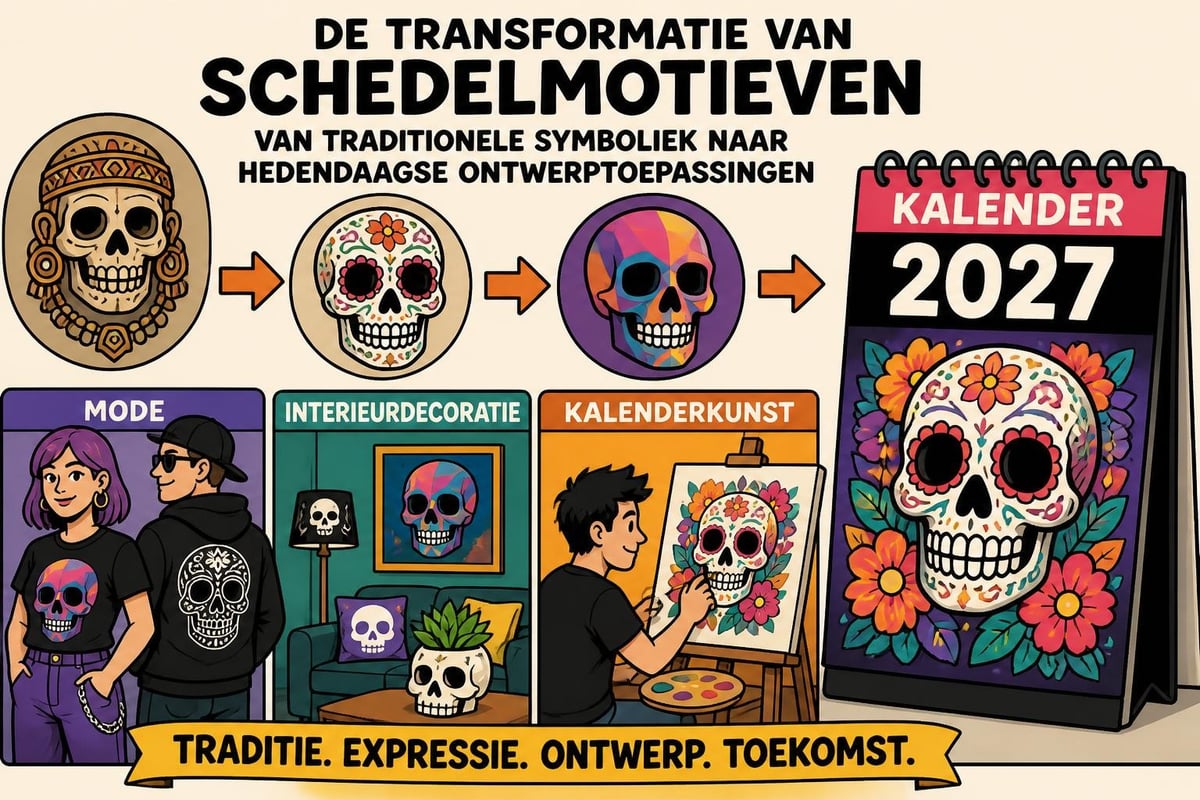
De hedendaagse fascination met schedels heeft geleid tot een explosie van creatieve toepassingen. Van haute couture tot straatmode, van rockposters tot kalenderontwerpen, het schedelmotief is overal aanwezig.
Mode en accessoires
Grote modehuizen zoals Alexander McQueen en Philipp Plein hebben schedels tot hun handelsmerk gemaakt. Wat ooit als provocerend of zelfs shockerend werd beschouwd, is nu een mainstream designelement geworden. Schedels verschijnen op:
T-shirts en sweaters met artistieke interpretaties
Sieraden van edele metalen met gedetailleerde gravures
Tassen en schoenen als statement-elementen
Telefoonhoesjes met minimalistische of maximale designs
Calendars and visual planning
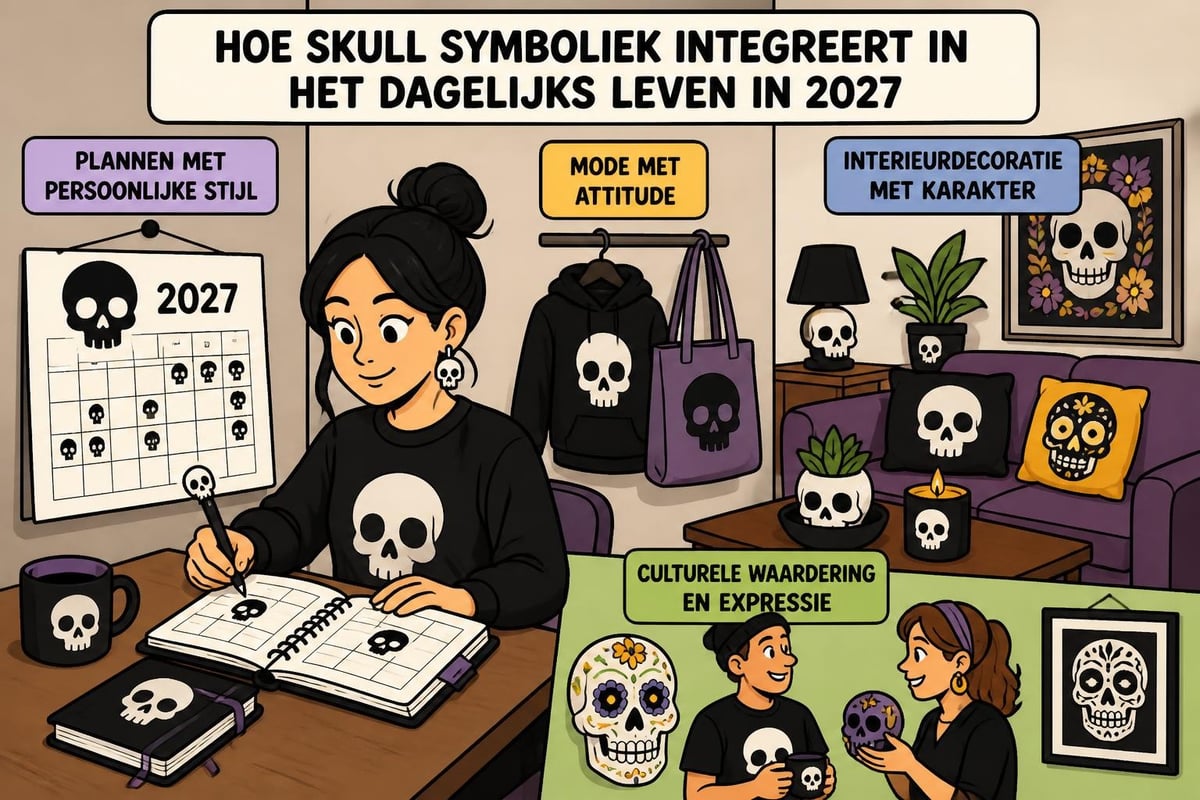
The use of skull motifs in calendars for 2027 reflects a growing need for expressive, personal planning tools. At Kalenderwinkel.nl customers can find a variety of calendar designs that embrace contemporary art traditions, from minimalist to lavishly decorated editions.
De populariteit van schedels in kalenderontwerp komt voort uit meerdere factoren. Ten eerste spreekt het symbool tot verschillende demografische groepen, van kunstliefhebbers tot mensen die geïnteresseerd zijn in alternatieve culturen. Ten tweede biedt het schedelmotief eindeloze mogelijkheden voor artistieke interpretatie.
Verschillende kalenderstijlen die gebruik maken van artistieke motieven:
Minimalistische designs met subtiele symboliek
Kleurrijke interpretaties geïnspireerd door Mexicaanse tradities
Gotische stijlen met romantische elementen
Botanische combinaties met natuurlijke elementen
Vintage anatomische illustraties in moderne context
Voor degenen die ook onderweg gehydrateerd willen blijven met stijl, biedt een accessoire als de Baagl Drinkfles 700 ml Voetbal een praktische aanvulling op dagelijkse routines, perfect voor bij het gebruik van een actieve planner.
Schedels in tattoo-cultuur en lichaamkunst
De tattoo-industrie heeft een ongekende invloed gehad op de perceptie van schedels in moderne cultuur. Wat begon als een symbool voor rebellen en outsiders, is uitgegroeid tot een geaccepteerde kunstvorm die door alle lagen van de bevolking wordt omarmd.
Verschillende tattoostijlen
Traditional American tattoos presenteren schedels met gedurfde lijnen en beperkte kleurpaletten. Deze klassieke stijl, gepopulariseerd door pioniers zoals Sailor Jerry, combineert schedels vaak met rozen, slangen of ankers. De symboliek is krachtig: het contrast tussen leven (rozen) en dood (schedels) creëert een visueel verhaal over dualiteit.
Realistische schedeltattoos vereisen exceptionele technische vaardigheid. Tatoeëerders besteden uren aan het perfectioneren van schaduwen, texturen en anatomische details om driedimensionale effecten te creëren. Deze kunstwerken zijn zo gedetailleerd dat ze op medische illustraties lijken.
Culturele betekenissen in tattoos
De betekenis van een schedeltattoo varieert enorm afhankelijk van de culturele context en persoonlijke interpretatie:
Mexican sugar skulls: joy, family, celebration of life
European skulls with roses: beauty in transience, love that conquers death
Japanese skulls: change, life cycle, natural transformation
Celtic skulls: protection from ancestors, connection to the past
Skulls in interior design and home accessories
The integration of skull motifs into home decor has led to an interesting design trend that can be both edgy and elegant. Interior designers have found that skulls, when tastefully applied, can give a space character and personality.
Different decorative approaches
Minimalist interpretations use subtle skull elements as accents. A simple black-and-white print of an anatomical drawing can give a modern living room an intellectual edge. This approach appeals to people interested in science, art, or history.
Maximalist design, on the other hand, embraces the full expression of the skull motif. Think of tapestries with Mexican calaveras, cushions with colorful skull prints, and decorative objects that are exuberant and festive. This style works particularly well in eclectic interiors where different cultural influences come together.
Room
Decoration idea
Style
Living room
Anatomical wall prints
Intellectual-minimalist
Bedroom
Textiles with subtle motifs
Romantic-gothic
Workspace
Calendars with artistic skulls
Creatively inspiring
Kitchen
Vintage botanical prints
Classical-educational
For those who want to organize their workspace with a touch of personality, options like the familieplanner taupe pattern 2027 offer a stylish way to plan the year.
Skulls in digital art and graphic design
The digital revolution has created new possibilities for manipulating and reinterpreting skull motifs. Graphic designers experiment with 3D renders, fractal patterns, and digital collages that push traditional boundaries.
Software and techniques
Modern design software like Adobe Illustrator and Blender enables artists to create hyperrealistic skulls or abstract them into unrecognizable geometric forms. These digital tools have promoted the democratization of art creation, allowing anyone with a computer and creativity to make unique skull-inspired artwork.
Populaire digitale technieken omvatten:
Vectorillustraties met oneindig schaalbare details
3D-modeling voor realistische anatomische studies
Digitale painting met traditionele esthetiek
Foto-manipulatie waarbij schedels worden gecombineerd met natuurelementen
Generatieve kunst waarbij algoritmes unieke schedelvariaties creëren
Social media en virale trends
Platforms zoals Instagram en Pinterest hebben schedel-geïnspireerde kunst toegankelijker gemaakt dan ooit. Hashtags zoals #skulllart en #sugarskull verbinden miljoenen posts, waardoor een mondiale gemeenschap van enthousiastelingen en kunstenaars ontstaat. Deze digitale connectie heeft geleid tot cross-culturele uitwisseling van ideeën en technieken.
Educatieve waarde van schedels in kunst en wetenschap
Buiten de esthetische en symbolische dimensies dienen schedels ook belangrijke educatieve doeleinden. In medische opleidingen blijven schedelmodellen essentiële leermiddelen voor het begrijpen van menselijke anatomie.
Anatomie en biologie
Studenten geneeskunde, tandheelkunde en biologie besteden significant tijd aan het bestuderen van de schedel. De complexe structuur, met haar 22 botten, ontelbare foramen en ingewikkelde suturen, vertegenwoordigt een meesterwerk van natuurlijk engineering. Deze wetenschappelijke focus heeft ook de artistieke waardering voor schedels verdiept.
Belangrijke anatomische aspecten die kunstenaars en wetenschappers fascineren:
De symmetrie en proporties die gouden ratio-principes volgen
De functionaliteit van elke opening en uitsteeksel
De variatie tussen individuele schedels
De manier waarop schedels tijdens de levensloop veranderen
De evolutionaire ontwikkeling van de menselijke schedel
Verzamelen en waarderen van schedel-gerelateerde kunst
Voor verzamelaars heeft schedel-gerelateerde kunst een unieke aantrekkingskracht. Of het nu gaat om vintage anatomische prenten, contemporaine schilderijen of beperkte oplage prints, de markt voor dit genre blijft groeien.
Wat maakt schedel-kunst waardevol?
Rarity plays a crucial role. Original anatomical drawings from the 18th and 19th centuries can fetch substantial sums at auction. Contemporary artists creating unique interpretations are also building valuable portfolios.
The cultural significance also increases value. Authentic Mexican folk art featuring skull motifs, especially pieces with documentable provenance, are highly sought after by collectors who value cultural heritage.
For people interested in integrating artistic elements into their daily planning, collections like the lifeplanner floral pattern 2027 offer ways to combine functionality with visual appeal.
Skulls in the future of design
As we move further into 2026 and look toward 2027, the skull symbol continues to evolve. New technologies like augmented reality and virtual reality create opportunities for immersive experiences with skull-inspired art. NFTs and digital art have also opened a new market for collectors.
Sustainability and ethics
Modern artists and designers are becoming increasingly aware of the ethical dimensions of their work. When creating skull-inspired products, more attention is being paid to sustainable materials and responsible production processes. This trend reflects a broader societal shift toward conscious consumerism.
Future developments we can expect:
Bioplastics for skull-inspired decorative objects
Interactive digital calendars with animated skull motifs
Cross-cultural collaborations that unite diverse traditions
Educational apps that combine anatomy and art
Customizable designs via 3D-printing technology
The fascination with skulls will likely endure because the symbol is so versatile. It can be both a memento mori, a celebration of life, an art object, a scientific specimen, or simply a cool design element. This versatility ensures each generation discovers new meanings and applications.
Skulls have proven that symbols can evolve over time without losing their core power, from spiritual contemplation to artistic expression and everyday design. Whether you're interested in cultural history, looking for unique interior pieces, or simply want to organize your daily planning with visually appealing tools, the world of skull motifs offers endless inspiration. At Kalenderwinkel.nl you'll find a wide range of calendars and planners for 2027 that cater to different styles and preferences, from classic to contemporary, all with reliable shipping and convenient payment options.