
Bloodhound: the fascinating scent hound breed for enthusiasts
- 12 min read

Discover everything about the Bloodhound: history, temperament, care, and tracking ability. A unique breed with an exceptional nose and a loyal nature.
The Bloodhound is one of the most recognizable dog breeds in the world, not only because of its characteristic long ears and wrinkled face but especially because of its legendary tracking ability. This ancient breed has a history that goes back centuries and a reputation that still endures in both working environments and loving families. For those considering bringing a Bloodhound into their home, or simply fascinated by this remarkable breed, there is a world of information to discover about their unique traits, care needs, and the role they play in our modern society.
The rich history of the Bloodhound
The origin of the Bloodhound is deeply rooted in European history. Monks at the Saint Hubert monastery in the Belgian Ardennes bred a special type of tracking dog in the Middle Ages that became known for its exceptional sense of smell. These dogs, initially called "chiens de Saint-Hubert," formed the basis for what we now know as the Bloodhound.
From noble hunting to modern tracking work
In the centuries that followed, these dogs spread across Europe and eventually to America. Noble families valued the Bloodhound for tracking game during hunts, but their talents went beyond hunting alone. The name "Bloodhound" has nothing to do with bloodthirstiness, as is often thought, but refers to the "blooded hound" — a hound of pure blood, of noble descent.
Key historical milestones:
- 8th century: first mentions of tracking dogs in Belgian monasteries
- Middle Ages: development of the modern Bloodhound type
- 16th century: introduction to England by Queen Elizabeth I
- 19th century: official recognition as a breed
- 20th century: use by police and rescue services worldwide
The American Kennel Club recognizes the Bloodhound as a breed within the hound group, with specific standards for appearance and temperament. In Europe, The Kennel Club follows similar guidelines that ensure the breed's authenticity.
Physical characteristics and the unique appearance
The Bloodhound is unmistakable in appearance. With its long, velvety ears that nearly reach the ground and its pronounced wrinkled skin, especially around the head and neck, this breed is a striking sight.

Body build and dimensions
An adult Bloodhound is an imposing animal. Males typically reach a withers height of 64 to 72 centimeters and weigh between 41 and 50 kilograms. Females are slightly smaller, with a withers height of 58 to 66 centimeters and a weight of 36 to 45 kilograms.
| Characteristic | Male | Female |
|---|---|---|
| Withers height | 64-72 cm | 58-66 cm |
| Weight | 41-50 kg | 36-45 kg |
| Lifespan | 10–12 years | 10–12 years |
| Coat length | Short | Short |
The coat type is short and dense, requiring relatively little maintenance. The most common colors are black-and-tan, liver-and-tan, and tan, often with a darker saddle on the back.
The nose that smells everything
The most striking feature of the bloodhound is not visible but olfactory. These dogs are estimated to have 300 million scent receptors in their nose, compared with about 5 million in humans. Their long ears and loose skin folds help funnel and trap scent particles toward the nose while tracking.
Character and temperament of the bloodhound
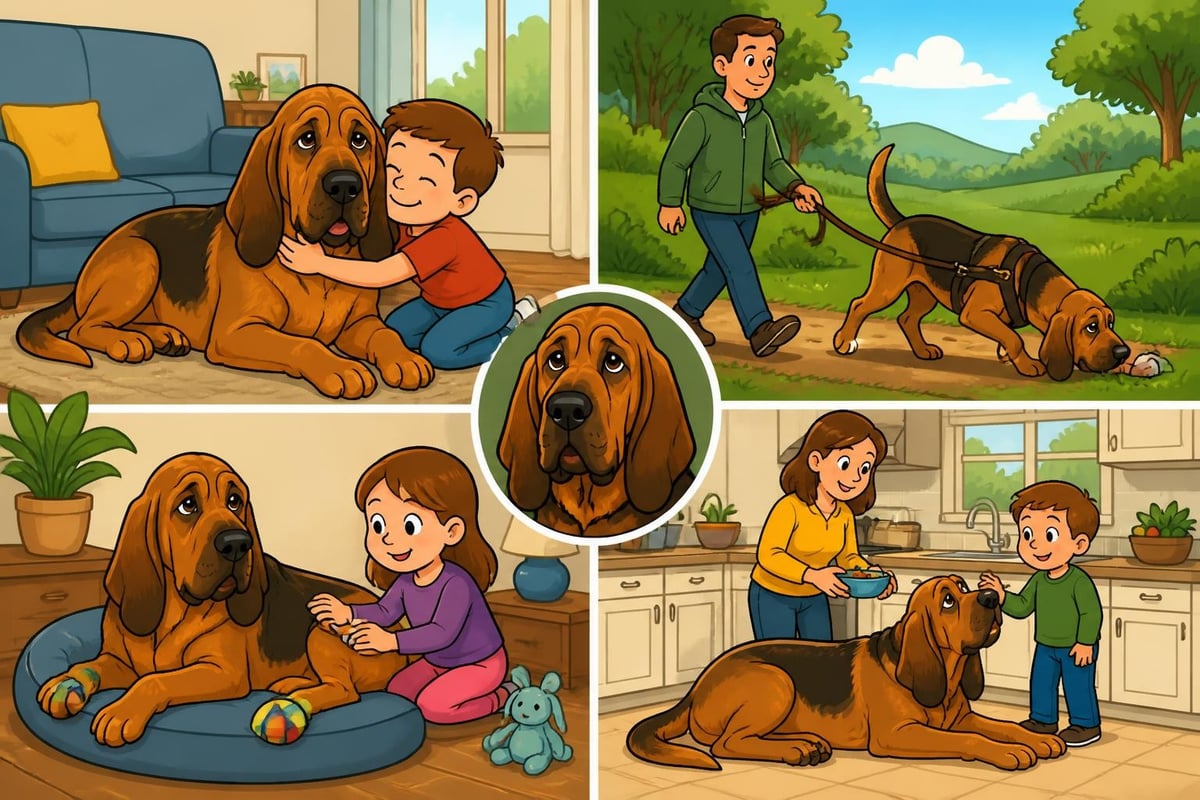
Despite their formidable appearance and professional tracking abilities, bloodhounds are extraordinarily gentle and patient. They are known as excellent family dogs with a particularly friendly disposition, especially toward children.
Key personality traits:
- Friendly and patient
- Determined and driven during tracking work
- Sometimes stubborn or headstrong
- Social and people-oriented
- Calm indoors, active outdoors
- Good with other dogs and pets
The bloodhound is not a watchdog in the traditional sense. Although their deep, resonant bark can sound intimidating, they usually greet strangers with enthusiasm rather than suspicion. This trait makes them ideal for families, but less suitable for someone seeking a protective dog.
Training and upbringing
The bloodhound requires a consistent but positive approach to training. Their strong tracking instinct means they are often distracted by interesting scents during walks. A sturdy leash and plenty of patience are essential for an enjoyable walking experience.
New dog owners should realize that bloodhounds, although intelligent, can sometimes show selective hearing when following an intriguing scent. Early socialization and obedience training are crucial to producing a well-balanced adult dog.
The bloodhound as a tracking dog
The National Police Bloodhound Association recognizes the bloodhound as the gold standard for human tracking. Police forces worldwide deploy bloodhounds to locate missing persons, fugitive suspects, and evidence at crime scenes.
Applications in search and rescue
Bloodhounds can follow a human scent that is more than 300 hours old and across distances of over 200 kilometers. This remarkable ability comes from their capacity to distinguish and follow an individual human odor, even in challenging conditions.
A recent study published in the scientific literature analyzes the reliability and legal aspects of tracking-dog deployment, with bloodhounds consistently emerging as the most reliable for long-distance tracking.

Professional deployments:
- Missing person detection (rescue services)
- Criminal investigation (police)
- Search and rescue missions after disasters
- Wildlife management and anti-poaching operations
- Therapeutic and educational programs
Recent cases from Allegheny County show how bloodhounds are involved in community-focused police work, not only for tracking but also for education and public engagement.
Bloodhound health and welfare
As with many large dog breeds, bloodhounds have specific health care needs potential owners should consider. A responsible breeder will openly communicate about health screening of parent dogs.
Common health issues
The bloodhound is prone to certain hereditary conditions. Hip dysplasia occurs relatively often, with The Kennel Club's annual hip report providing valuable statistical data on breed-specific hip scores.
| Condition | Prevalence | Prevention/Screening |
|---|---|---|
| Hip dysplasia | Moderate to high | Hip screening of parent dogs |
| Elbow dysplasia | Moderate | Elbow screening |
| Gastric dilatation-volvulus (bloat) | High risk | Multiple small meals, rest after eating |
| Eye issues (entropion, ectropion) | Moderate | Eye examination, sometimes surgery |
| Skin infections | Moderate | Regular skin care, especially folds |
The Bloodhound Joint Breed Health Group publishes comprehensive breeding strategies and health guidelines for 2026 and beyond, focusing on improving genetic diversity and reducing hereditary conditions.
Grooming needs
Although the bloodhound's short coat requires minimal upkeep, other aspects of their care demand regular attention:
- Ear care: The long ears should be checked and cleaned weekly to prevent infections
- Skin folds: Facial folds in particular should be kept dry
- Nails: Regular trimming is essential for comfort and health
- Exercise: Daily walks of at least 1-2 hours
- Nutrition: High-quality food, tailored to age and activity level
The bloodhound as a family member
For the right family, a bloodhound can be an incredibly rewarding companion. They love children and show a patience that allows even small kids to touch their ears and tail without the dog batting an eye.
Ideal living environment
Bloodhounds thrive best in homes with access to a secure yard. Their tendency to follow a trail means a tall, sturdy fence is essential – a Bloodhound that picks up an interesting scent can be surprisingly determined in its attempt to follow it.
Apartment living is possible but not ideal. These dogs are relatively calm indoors, but their size and exercise needs make a home with a yard much more suitable.
Living with other pets
Bloodhounds are generally social with other dogs and can live well with other pets when socialized from a young age. Their hunting instinct is less pronounced than in some other hound breeds, though they are naturally interested in the scents of smaller animals.
The Bloodhound in popular culture
The Bloodhound has secured a firm place in popular culture, often depicted as the ultimate tracking dog. From classical literature to modern films, the Bloodhound symbolizes tenacity, loyalty, and an unparalleled scenting ability.
Notable Bloodhounds in media:
- "Uncle Tom's Cabin" by Harriet Beecher Stowe included Bloodhounds, albeit in a controversial context
- Disney's "The Fox and the Hound" introduced generations of children to this breed
- Numerous detective stories use Bloodhounds as tracking helpers
- Documentaries about police work regularly show Bloodhounds in action
This media presence has both helped and harmed the perception of the breed. While their abilities are celebrated, some portrayals have contributed to misunderstandings about their temperament.
Choosing a Bloodhound and breeders
Choosing a Bloodhound requires careful research. The American Bloodhound Club offers a breeders directory and guidelines for finding responsible breeders who prioritize health and temperament over appearance alone.
What to look for in a breeder
A responsible breeder will:
- Being prepared to answer multiple questions about the breed
- Health testing of parent dogs can show
- Raising puppies in a clean, socially rich environment
- Providing a lifetime support guarantee
- Communicating honestly about breed-specific challenges
The Bloodhound Club in the United Kingdom provides extensive health information and breeding standards that serve as an international reference.
Adopting an adult Bloodhound through a breed-specific rescue organization is also a valuable option. Many adult Bloodhounds are looking for a second chance and can make excellent family members.
The costs of bloodhound ownership
Before you decide to bring a bloodhound into your home, it's important to understand the financial implications. These dogs are not only large in size but also in their impact on your budget.
Average costs (2026):
- Purchase price from breeder: €1,200 - €2,500
- Annual food costs: €800 - €1,200
- Routine veterinary costs: €400 - €600
- Insurance: €300 - €600 per year
- Training and socialization: €200 - €500 (first year)
These figures are estimates and may vary depending on location, specific needs, and individual circumstances. Medical emergencies or chronic conditions can incur significant additional costs.
The bloodhound and calendars for 2027
For lovers of these majestic dogs, there is nothing better than being reminded daily of their passion. Although the bloodhound appears less often on dog calendars than some more popular breeds, there are nice alternatives for dog enthusiasts who want to organize their year with images of their favorite four-legged friends.
At specialized calendar retailers you can find beautiful dog calendars for 2027 featuring various breeds. From German Shepherds to Bernese Mountain Dogs, there's a fitting calendar for every dog lover. Labrador Retrievers and Golden Retriever puppies are also popular choices.
For those who specifically love working dogs, like the bloodhound, calendars featuring active breeds such as the Border Collie or Airedale Terrier can be a great choice. These calendars celebrate the work ethic and intelligence that are also characteristic of bloodhounds.
In addition, there are also fun birthday calendars available, such as the Ginger and Bread birthday calendar, perfect for keeping track of all the important dates for your bloodhound and other family members.
Tracking training
Many bloodhound owners find great satisfaction in training their dog for recreational tracking. Even without professional ambitions, these activities can provide mental stimulation and tap into your dog’s natural talents.
Starting with basic tracking training
Training a bloodhound for tracking ideally begins at a young age, but even older dogs can learn the basics:
- Scent recognition: Teach your dog to associate a specific scent with a reward
- Short tracks: Start with fresh, short tracks of only a few meters
- Gradual increase: Slowly increase the distance and age of the track
- Varied terrains: Practice on different surfaces and in different weather conditions
- Positive reinforcement: Use consistently positive training and plenty of praise
For serious enthusiasts, organizations offer specialized training and certifications, where dog and handler learn to work together according to professional standards.
The future of the bloodhound breed
The bloodhound breed faces challenges in the 21st century, like many traditional working breeds. While their abilities remain highly valued in professional settings, the number of pet bloodhounds is not increasing dramatically like some fashionable breeds.
This is actually positive for breed purity. Responsible breeders continue to focus on preserving the characteristic traits that make the bloodhound so unique: the exceptional tracking ability, the stable temperament, and physical robustness.
Trends and developments:
- Increased focus on genetic health screening
- Growing interest in amateur tracking as a canine sport
- Recognition of the value of working lines versus show lines
- International collaboration between breeding clubs for genetic diversity
The balance between preserving working abilities and breeding healthy, long-lived companion dogs remains a central challenge for the bloodhound community.
The bloodhound is an extraordinary breed with both a rich history and a promising future. Whether you are considering adding a bloodhound to your family, are fascinated by their tracking abilities, or simply appreciate their noble appearance, there is much to admire about these gentle giants. For dog lovers who want to plan their year with beautiful images of various breeds, Kalenderwinkel.nl offers an extensive range of dog calendars for 2027, with reliable shipping via PostNL, DHL, or UPS and convenient payment options for a hassle-free ordering process.

Related categories

Blog posts
-

, by Kalenderwinkel.nl Bloodhound: the fascinating scent hound breed for enthusiasts
-

, by Kalenderwinkel.nl Patterdale terrier: character, history and care
-

, by Kalenderwinkel.nl Mopshond: all about this charming dog breed
-

, by Kalenderwinkel.nl Parrot: colorful roommate for years of enjoyment


