What is an elephant and what species exist? Read about the three species, their size, lifestyle and threats, plus ideas for an elephant calendar.
An elephant is the largest living land animal in the world: a plant-eating mammal with a trunk, tusks and huge, wrinkled skin. There are three living species, the African savanna elephant, the African forest elephant and the Asian elephant, and each species has its own size, habitat and characteristics.
Anyone who has ever stood face to face with an elephant knows that a photo does not do that moment justice. The animal moves almost silently, despite its weight of several tonnes. The trunk feels, smells and greets. The eyes look surprisingly gentle. In this article you will be taken through the species, the body features, the social life and the concerns about their survival. At the end you will find ideas to put that feeling on your wall.
Is an elephant a mammal?
Yes, an elephant is a mammal: the female gives birth to live young and feeds them with milk. The gestation period is about 22 months, the longest of any land animal. According to WWF, a female typically has a calf once every four to five years.
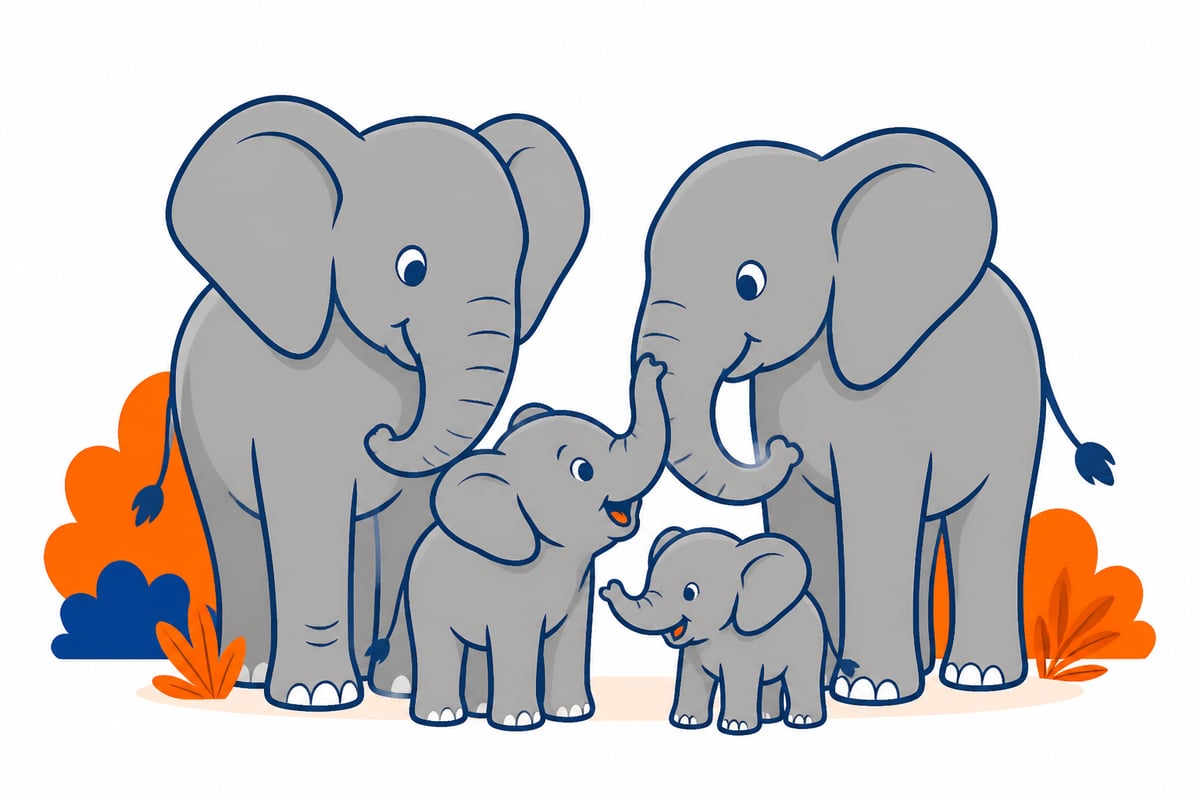
That comes with a lot of care. A calf is born under the protection of the herd and is immediately surrounded by aunts, sisters and older cousins. They help it to its feet and lead it to water. The young stay with the mother for years and learn from her which plants are edible and where to find water in dry times.
The elephant belongs to the proboscideans, a group of which elephants are the only living representatives. Their closest living relatives are, surprisingly, the hyrax and the manatee, small to medium-sized animals that look completely different.
What species of elephants are there?
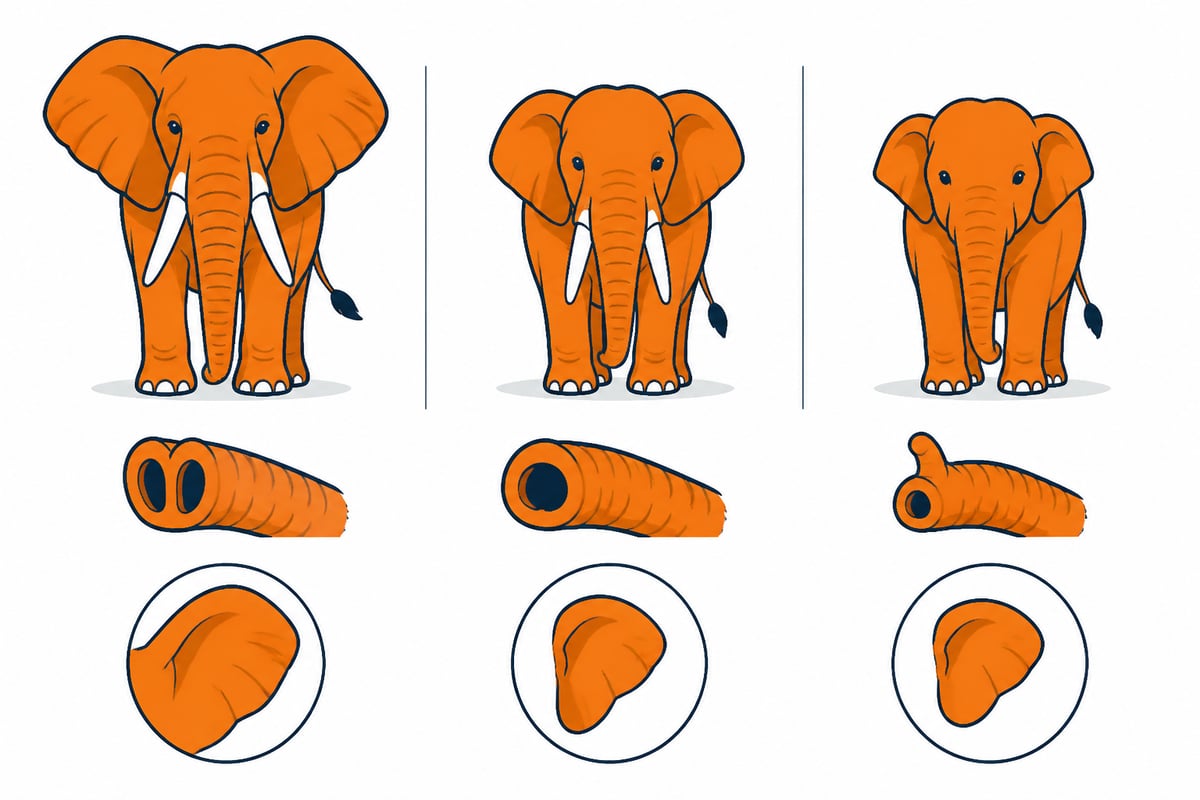
There are three living elephant species: the African savanna elephant, the African forest elephant and the Asian elephant, reports WWF. For a long time the two African forms were considered a single species. It is now clear that they are genetically distinct enough to be regarded as separate species.
Characteristic
Savanna elephant
Forest elephant
Asian elephant
Habitat
Savannas and open woodland in Africa
Rainforests of Central and West Africa
Forests and grasslands in South and Southeast Asia
Size
Largest species
Smaller and more compact
Somewhere in between
Ears
Very large
Smaller and rounded
Noticeably smaller
Tusks
In both sexes
Straight and downward-pointing
Usually only in males
The African savanna elephant
The savanna elephant is the giant among giants. A male can, according to WWF, grow to over 3.7 meters at the shoulder and weigh about 6 tonnes. This is the animal you see in safari photos: the enormous fan-shaped ears, the curved tusks and the clouds of dust around the legs.
The African forest elephant
The forest elephant lives hidden in the rainforest and is therefore photographed much less often. It grows to about 4 meters long, 2.8 meters high and can weigh up to 3 tons. Its smaller stature suits the dense forest, where you'd rather not struggle through a tangle of lianas with a body the size of a delivery van.
The Asian elephant
The Asian elephant is recognizable by its smaller ears and a rounded back with a domed head. The difference is also at the trunk tip: according to IFAW, the Asian elephant has a single finger-like projection at the end of the trunk, while African elephants have two. That one 'finger' acts like a tool to grasp a blade of grass.
How do you recognize an elephant by its body?
You recognize an elephant by four things: the trunk, the tusks, the ears and the thick, wrinkled skin. Each part has more functions than you might think at first glance.
The trunk is a fusion of the nose and upper lip, with tens of thousands of muscles. An elephant drinks with it, smells with it, lifts logs with it and picks a peanut up from the ground with it.
The tusks are extended incisors. They are used to dig for water, strip bark from trees and fight.
The ears cool the animal. By flapping them it cools the blood that runs through the thin skin.
The skin is about 2.5 centimeters thick, according to WWF. Still, an elephant can feel a fly on its back. Mud and dust baths protect against the sun and insects.
What stands out: an elephant has no sweat glands. That's why you so often see them in water or rolling in the mud — a behavior that looks cute but is a matter of survival on a hot afternoon.
How intelligent are elephants?
Elephants are among the most intelligent animals on Earth, with a large and complex brain and an exceptional memory. They recognize themselves in a mirror, which only a few species can do, and they use branches as tools to shoo away flies.
People often talk about the oldest females in a herd, the matriarchs. They remember where waterholes are that you only need in extremely dry years. When a drought hits, the matriarch sometimes leads her family tens of kilometers to a place she last visited decades earlier. This is how knowledge is passed down from generation to generation.
Elephants are also emotionally rich. They comfort each other, play together and stay with a deceased family member. Anyone who observes a herd for a while does not see a group of animals but a family with habits and character.
How many African elephants remain?
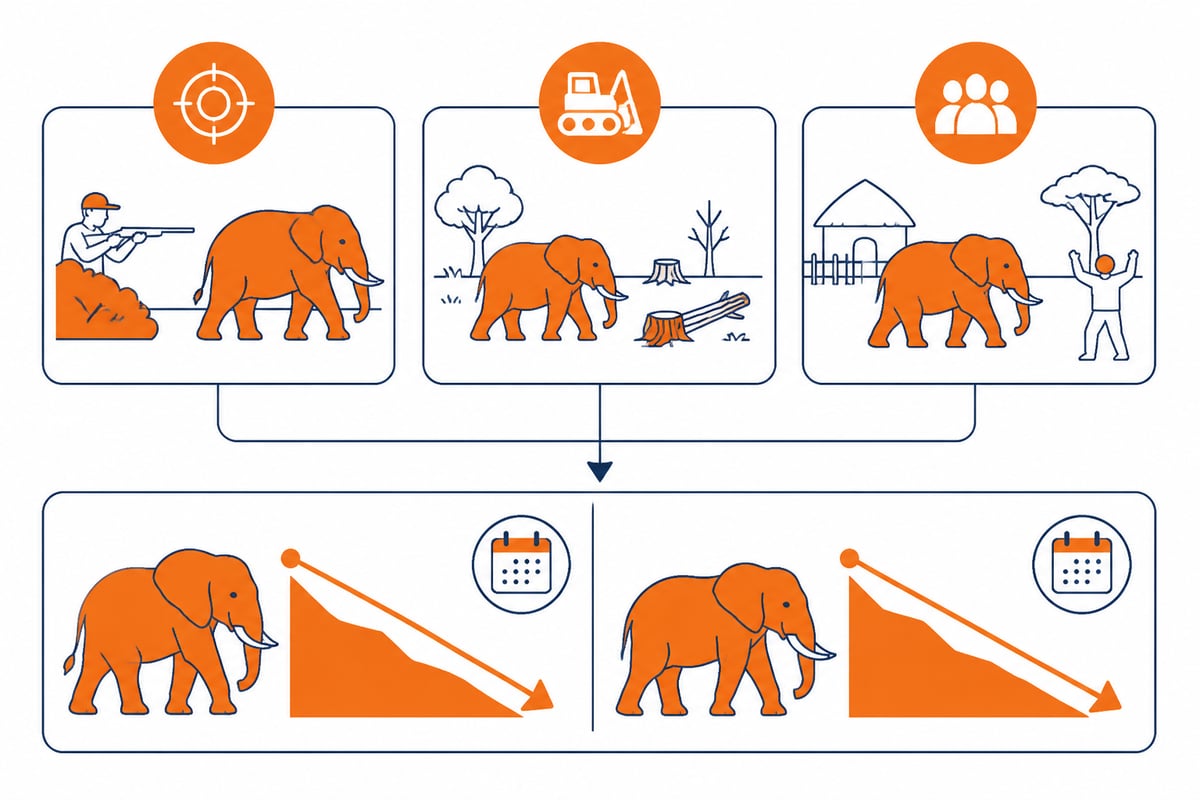
There are significantly fewer African elephants than before, and both African species are listed as threatened on the Red List. According to IUCN NL, the forest elephant population fell by more than 86 percent in 31 years, and the savanna elephant population declined by at least 60 percent in 50 years.
The causes are known:
Poaching for ivory, where animals with large tusks are especially targeted.
Loss of habitat due to agriculture, roads and settlements.
Conflicts with people, for example when elephants trample crops.
The good news is that in many places there is hard work being done on protection: protected areas, anti-poaching patrols and projects in which local communities share in the benefits of conservation. Anyone who cares about elephants can contribute by donating to a recognized conservation organization.
What do you call an elephant and its family?
A female is called a cow, a male a bull and a young one a calf. A group of elephants is called a herd, and it is usually led by the oldest and most experienced cow, the matriarch.
The structure of such a herd is fairly fixed. Females stay with their mother and sisters for life, while young bulls leave at a certain point. They then live alone or in a loose group, and only join a herd during mating season. This creates a society that revolves almost entirely around the females, with a clear division of tasks and a lot of mutual care.
You can see that best with a calf. Because a cow only has a youngster once every four to five years, such a little one is precious to the whole group. Aunts and older sisters circle the calf, keep it in the middle of the herd and sometimes take over supervision while the mother can eat in peace. Young cows thus practice for their own motherhood. A young bull, on the other hand, goes his own way and learns from older bulls what he needs to fend for himself and later find a mate.
What do elephants eat and how do they live?
An elephant is a herbivore that eats for long hours every day: grass, leaves, bark, fruit and roots. Such a large body needs a lot of fuel, and someone weighing three to six tons cannot afford a light breakfast. A forest elephant, which can weigh up to 3 tons, finds its food mainly under the canopy: fruit, young shoots and bark. A savanna elephant of nearly 6,000 kilos is more likely to pull up large amounts of grass and branches.
Their feeding behavior changes the landscape. Elephants topple trees, create clearings in the forest and spread seeds through their dung. Some tree species even germinate better after passing through an elephant. Biologists therefore call the elephant a keystone species: if it disappears, the whole environment changes. The clearings it leaves give light to young plants and provide space for smaller animals.
That also explains why they walk so much. A herd travels long distances in search of water and food, often following the same routes used for generations. The matriarch sets the direction, and her memory of waterholes and food-rich places determines whether the family gets through a dry season well. Between meals they drink, bathe in mud and rest in the shade.
An elephant at home: ideas for your year planning
Anyone who loves elephants can feel that all year with a calendar that captures their majesty. An elephant is also an animal that suits the turn of the year: large, patient and with a long memory for what matters.
At Kalenderwinkel.nl you can find the elephant calendar collection, with a new image of these giants each month. Two options for 2027 are the elephant calendar 2027 and a second version of the elephant calendar 2027. Hang one in the living room, hallway or nursery, and each month begins with a new portrait.
A few moments to use it:
Gift for animal lovers, for example around Sinterklaas or the holidays.
For the nursery, as a prompt to talk together about animals and nature.
At the office, for those who want to daydream about the savanna between meetings.
Kalenderwinkel.nl ships the same day if you order before 16:00 on weekdays, and shipping within the Netherlands is free from €39. Returns cost nothing, and if you have questions you can get personal help via WhatsApp or email on weekdays.
More elephants at home: puzzles and cards
A calendar isn’t the only way to bring elephants into your home. For puzzlers there is the Van mug tot olifant 1000-piece puzzle, a soothing activity for a rainy Sunday. Younger puzzlers can try Het eiland van olifant, a 200-piece puzzle. And if you like to send a personal greeting, there’s a 10-card Van mug tot olifant card set to give a birthday or thank-you some extra attention.
Colors for elephant lovers
An elephant is also a popular subject for drawing and coloring. On Coloring Page Lab you’ll find a large collection of coloring pages, handy for a quiet hour with children or for yourself as relaxation. And if you want something printed on paper, for example your own booklet with favorite animal photos, you can turn to a printer such as Print It ZA, which offers various print solutions.
FAQ
How old can an elephant get?
In the wild, elephants live to be about sixty to seventy years old. Their age is linked to their teeth: when the molars are worn out, they find it harder to eat. Without food, the animal then gradually weakens.
Why do elephants have such large ears?
The large ears help an elephant regulate its body temperature. By flapping them, the blood in the thin skin cools down. This is especially important for the savanna elephant, which lives in a warm climate and therefore has large ears.
Can elephants swim?
Yes, elephants are good swimmers. They use their trunk like a snorkel to breathe while walking through or floating in deep water. Some herds even cross rivers to reach new food sources.
Looking for an elephant you can admire all year long? Start today by seeing which print best suits your living room, and visit Kalenderwinkel.nl to pick your favorite elephant calendar for 2027. With a 9.4 rating from thousands of satisfied customers, you can browse calendars, planners, and all related items with confidence.