Discover the German Hound: a loyal hunting dog with character. Read about varieties, temperament, care, and how to organize their year.
Few dog breeds are as versatile and devoted as the German Shorthaired Pointer. These intelligent hunting dogs, with their characteristic pointing stance, have won the hearts of hunters and dog lovers for generations. Whether you're looking for a reliable hunting partner or an active family dog, the German Shorthaired Pointer offers a unique combination of work drive, loyalty, and adaptability. In this article I'll take you into the life of these special dogs and show you why they are much more than just hunting dogs.
The origin of the German Shorthaired Pointer
The story of the German Shorthaired Pointer begins in Germany, where hunters for centuries sought the perfect versatile hunting dog. The focus was on developing a breed that could work both before and after the shot, with an excellent nose and a natural inclination to point. This selection process led to different varieties within the German Shorthaired Pointer family.
Three distinct varieties
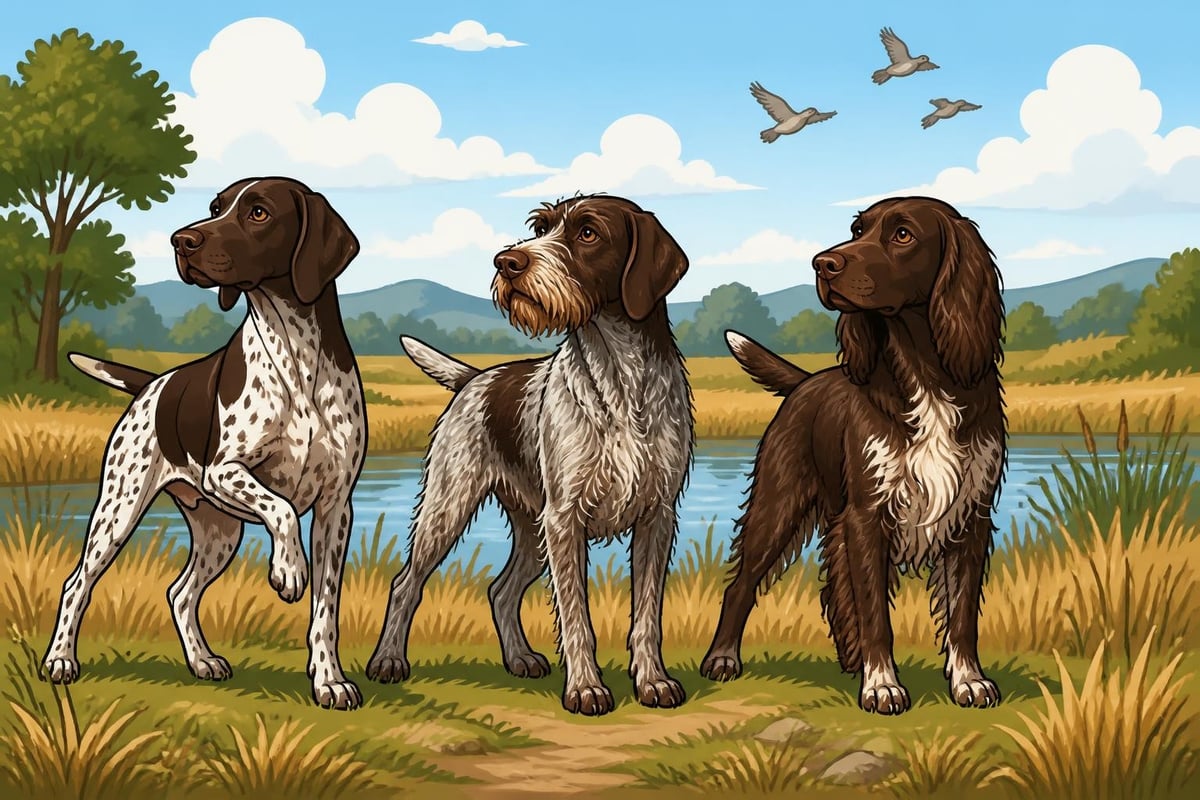
The German Shorthaired Pointer comes in three main varieties, each with its own characteristics:
Shorthaired (Deutsch Kurzhaar): The best-known variety with a short, smooth coat
Wirehaired (Deutsch Drahthaar): A rough-coated version with hardy protection
Longhaired (Deutsch Langhaar): The longhaired variety with elegant feathering
The official FCI breed standard accurately describes the traits a German Shorthaired Pointer must meet. This standard forms the basis for breeders worldwide and ensures the breed retains its true characteristics.
The development of these breeds was no accident. German hunters had specific requirements: a dog that could work in varied terrain, from wooded areas to open fields. The variation in coat type arose from practical considerations, depending on the climate and hunting conditions in which the dogs had to operate.
Character and temperament of the German Shorthaired Pointer
What makes the German Shorthaired Pointer so special? The answer lies in their unique personality. These dogs are natural workers, with boundless energy and a deep desire to cooperate with their owner. I have heard countless stories from owners amazed by the intelligence and adaptability of their German Shorthaired Pointer.
Intelligence and trainability
The German Shorthaired Pointer is known for:
Quick learning ability and problem-solving thinking
Strong desire to please (but also an independent streak)
Excellent memory for commands and routines
Natural hunting instincts that may need channeling
These dogs are not little robots that obey blindly. They think along, take initiative and expect an owner who can challenge them mentally and physically. Detailed information about the temperament shows that this trait can be both a blessing and a challenge for inexperienced dog owners.
Trait
Score (1-5)
Explanation
Energy level
5/5
Extremely active, needs daily challenge
Trainability
4/5
Eager to learn but stubborn
Family-friendly
4/5
Excellent with proper socialization
Vigilance
3/5
Alert but not overreactive
Child-friendly
4/5
Patient and playful
The care of your German Shorthaired Pointer throughout the year
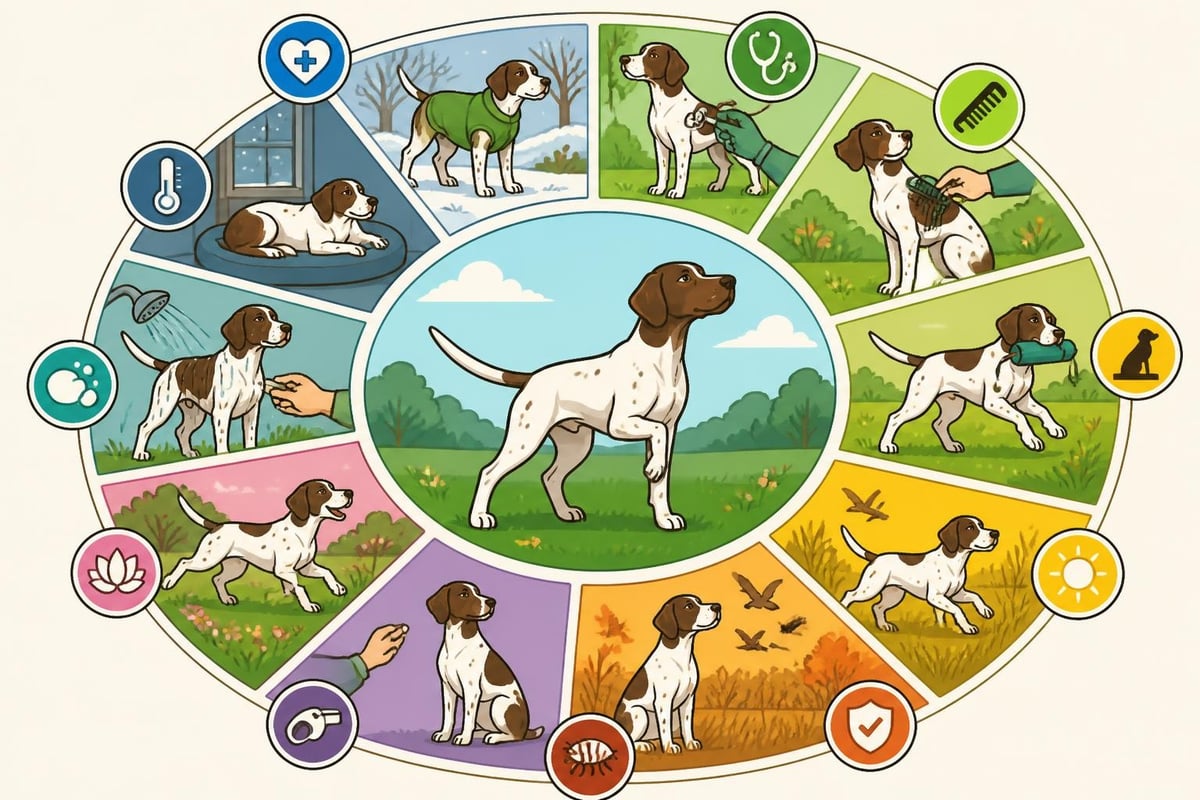
Owning a German Shorthaired Pointer means a commitment for all seasons. These dogs have specific needs year-round, and good planning helps enormously to safeguard their wellbeing. This is where organization comes into play.
Seasonal points of attention
Spring and summer: The active months bring extra challenges. Ticks, fleas and other parasites become more active. Your German Shorthaired Pointer’s coat needs extra attention after winter walks through woods and fields. Regular checks are essential.
Autumn: This season requires special attention for the coat, especially in the longhaired and wirehaired variants. Mud and leaves can become trapped, and the coat needs frequent care to prevent matting.
Winter: Despite their robust nature, German Shorthaired Pointers need protection against extreme weather. Their short coat (in the shorthaired variant) provides limited insulation in severe frost.
To keep track of all these care moments, many owners find a practical yearly planner indispensable. With it you can schedule vaccinations, flea treatments, coat maintenance and training activities clearly.
Training and activities for the German Shorthaired Pointer
The German Shorthaired Pointer is not a couch dog. These breeds were developed to work intensively, and that drive doesn’t just disappear. Information about hunting dog training and field trials shows the opportunities available to owners who want their dog to excel.
Basic and advanced training
A good upbringing starts early. Puppy classes are essential, but for the German Shorthaired Pointer it goes further:
Basic obedience: sit, stay, recall
Socialization with other dogs and people
Retrieving training
Scent work and tracking
Field work and standing for game (for hunting dogs)
Training a German Shorthaired Pointer is an ongoing process. They need mental stimulation beyond a neighborhood walk. Many owners use an organized planner to keep track of training schedules, classes and special activities.
Alternative activities
Not everyone hunts, and that's okay. The German Shorthaired Pointer excels in a variety of dog sports:
Agility: Their athletic build makes them perfect for this fast course
Mantrailing: Their excellent nose is put to good use here
Retrieving: Fetching work matches their natural instincts
Canicross: Running with your dog, ideal for the energetic German Shorthaired Pointer
Health and wellbeing
Like any purebred, German Shorthaired Pointers have specific health points to watch for. Veterinary breed information offers valuable insights into common conditions.
Common conditions
Hip dysplasia (HD): An inherited condition where the hip joint does not develop correctly. Responsible breeders screen their breeding animals for this. The breeding regulations of reputable clubs require this screening.
Eye disorders: Progressive retinal atrophy (PRA) and other hereditary eye problems can occur in the German Shorthaired Pointer.
Gastric dilation and volvulus (bloat): Larger dogs with deep chests are at risk for this life-threatening condition.
Preventive measure
Frequency
Importance
Annual health check
Once a year
High
Vaccinations
As scheduled
Essential
Dental check
Twice a year
Average
Weight monitoring
Monthly
High
HD/ED screening (breeding animals)
One-time (after 1 year)
Crucial
Keeping track of medical appointments and vaccination schedules is easier with a clear overview. A birthday calendar can help ensure you don't forget annual check-up moments.
The German Shorthaired Pointer as a family dog
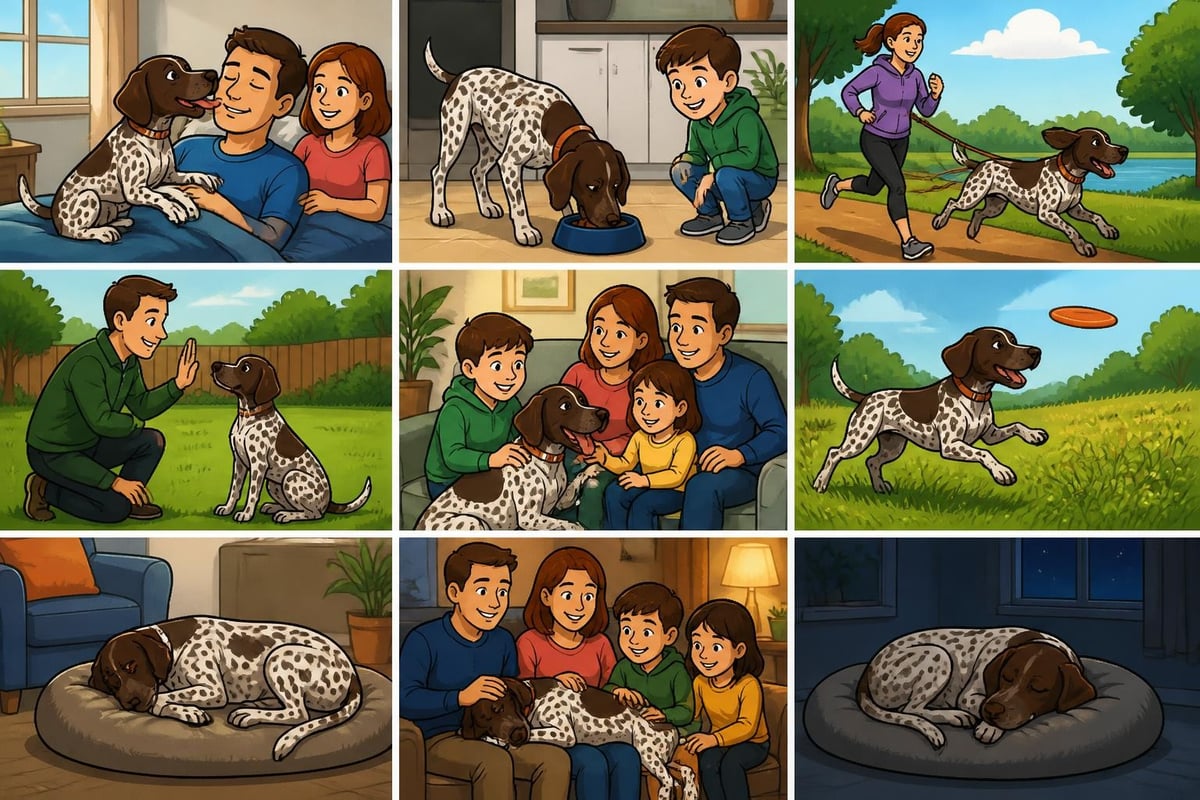
Although the German Shorthaired Pointer was bred as a hunting dog, he can thrive in a family environment. The key is understanding his needs and creating an environment where he can flourish.
Suitability for families
A German Shorthaired Pointer pairs well with:
Active families who enjoy being outdoors
Owners with experience or willingness to learn
Households with a securely fenced yard
People who have time for training and activities
Less suitable for:
City apartments without adequate opportunities for walks
First-time dog owners without guidance
Families with very young children (unless well socialized)
People who work long hours
Detailed breed information for owners helps prospective owners make an informed decision. It is not an impulse purchase, but a commitment for 12–14 years.
Living with other pets
The German Shorthaired Pointer has a strong prey drive. This means extra caution when living with:
Cats: Early socialization is crucial. Some German Shorthaired Pointers learn to live perfectly with cats; others will always have a chase instinct.
Small pets: Rabbits, guinea pigs, and birds may be seen as prey. Caution is advised, and unsupervised contact is not recommended.
Other dogs: Generally social with conspecifics, especially when well socialized from a young age.
Breeding and choosing a puppy
The decision to bring a German Shorthaired Pointer puppy into your home deserves careful preparation. Choosing the right breeder makes a huge difference in the character, health, and temperament of your future four-legged companion.
Delivering puppies without paperwork or for a suspiciously low price
Not allowing you to see the parent dogs
Asking no questions about your living situation
The first months with your puppy
A German Shorthaired Pointer puppy needs structure and consistency from day one. The first weeks are crucial for:
House training
Basic socialization
Building trust
Teaching basic commands
Preventive veterinary care
Many new owners find it helpful to use a practical planner to track puppy milestones, training progress, and veterinary appointments.
The German Shorthaired Pointer in the Netherlands
In the Netherlands the German Shorthaired Pointer has built a loyal following. Whether it’s active hunters or sporty families, these dogs have proven they can adapt very well to the Dutch climate and lifestyle.
Associations and community
Dutch owners can join various associations:
Breed clubs: Specific clubs for shorthaired, wirehaired and longhaired varieties
Hunting dog clubs: For owners who want to hunt with their dog or participate in field trials
Sport clubs: For agility, obedience and other dog sports
These associations organize events, training and shows where you meet like-minded owners. Sharing experiences, tips and challenges with other German Shorthaired Pointer owners is invaluable.
Ethical considerations
Welfare information about the breed emphasizes the importance of responsible breeding and ownership. As a prospective owner you bear responsibility for:
Choosing a healthy puppy from tested parents
Providing sufficient exercise and mental stimulation
Investing in good training and socialization
Supporting breeders who work according to ethical guidelines
Practical tips for organizing dog life
A German Shorthaired Pointer requires organization. From feeding schedules to training plans, from medical appointments to holiday preparations – it keeps you busy.
Essential planning points
Daily:
At least 1–2 hours of exercise and mental stimulation
Feeding times (often two meals per day)
Short training sessions
Weekly:
Thorough coat check and grooming
Training or dog sport activity
Social interaction with other dogs
Monthly:
Check and trim nails if necessary
Administer flea and tick prevention
Check weight
Annually:
Vaccinations according to schedule
Full health check at the vet
Re-register with chip registry if necessary
A clear wall calendar in the kitchen or utility room helps you remember these routines. Many owners mark fixed times with stickers or color codes.
Holiday with your German Shorthaired Pointer
The German Shorthaired Pointer is generally an excellent travel companion. They adapt well to new environments, provided they can get enough exercise. When planning vacations:
Find dog-friendly accommodations with sufficient exercise area
Bring familiar items (bed, toys, food)
Plan stops for exercise during long car trips
Check veterinary regulations when traveling abroad
If you can’t take your German Shorthaired Pointer with you, good alternatives are an experienced dog sitter who understands the breed’s needs, or a specialized boarding kennel with adequate exercise space.
The costs of a German Shorthaired Pointer
Honesty about the financial side of dog ownership is important. A German Shorthaired Pointer brings substantial costs, both one-time and ongoing.
Initial costs
Puppy purchase price: €1000-€1500 (from a reputable breeder)
These are averages. Unexpected medical situations can significantly increase costs. A good pet insurance policy provides financial security.
The future of the German Shorthaired Pointer
The breed remains popular with both hunters and active families. The focus on health screening and working traits ensures the German Shorthaired Pointer retains its versatility. Specialist information about specific varieties shows how breeders work to preserve breed-specific characteristics.
Breeding trends
Modern breeders balance between:
Health: Priority on tested, healthy breeding animals
Working traits: Preservation of hunting instinct and drive to work
Temperament: Selection for a stable, reliable temperament
Conformation: Meeting the breed standard without exaggeration
The Dutch German Shorthaired Pointer population benefits from international cooperation, preserving genetic diversity and avoiding inbreeding.
The German Shorthaired Pointer is more than a breed; it’s a lifestyle for active dog lovers. These versatile dogs require dedication, structure, and organization, but they repay that with unconditional loyalty and endless adventures. Whether you’re an experienced hunter or an active family looking for an energetic companion, a well-organized year starts with an overview. Kalenderwinkel.nl offers a wide range of calendars and planners for 2027 to help you keep track of all the important moments in your German Shorthaired Pointer’s life, from vaccinations to training milestones and everything in between.