What is the difference between a sea and an ocean? Read how they differ in size and depth, with examples like the North Sea and the Pacific Ocean.
An ocean is an enormous, continuous body of water that separates entire continents; a sea is smaller, shallower and largely surrounded by land. If you want to know where the border between sea and ocean lies, look at three things: size, depth and location. The North Sea is therefore a sea, the Atlantic Ocean an ocean, and the rest of this article shows how to recognize that at a glance.
What is the difference between a sea and an ocean?
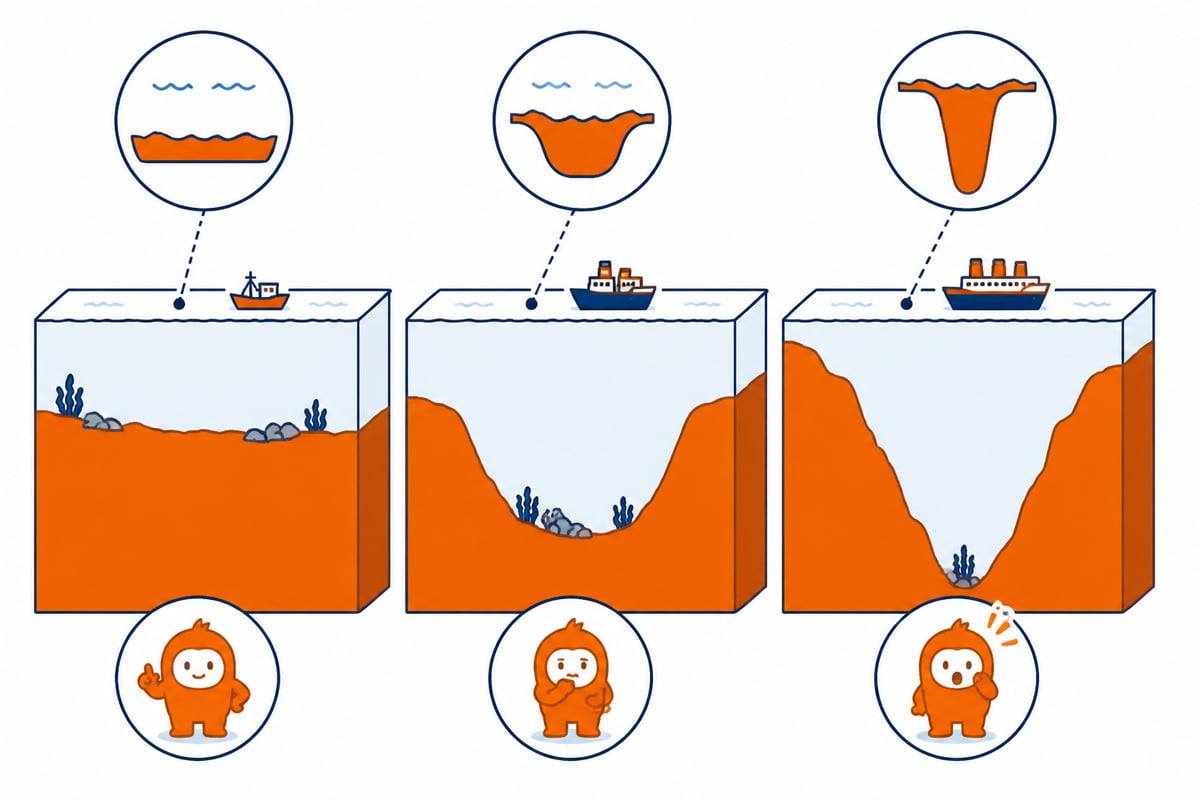
The difference between a sea and an ocean is one of scale: an ocean is much larger and deeper, a sea lies on the edge of an ocean or is largely enclosed by land.
Imagine an ocean as the planet's large main room and a sea as a side room half hidden behind a door. The rooms are connected, water flows from one to the other, but you immediately feel they are not the same space.
A quick comparison:
Characteristic
Ocean
Sea
Extent
Hundreds of millions of km²
Usually a few hundred thousand to several million km²
Depth
On average just over 3,600 meters
Often a few tens to hundreds of meters
Location
Open water between continents
Edge of an ocean or partly enclosed by land
Waves and currents
Own large current systems
Strongly influenced by the surrounding coast
Example
Atlantic Ocean
North Sea, Mediterranean Sea
Note: the words are used interchangeably in everyday life. There's nothing wrong with that, but if you want a precise answer, use this threefold division.
How many oceans are there, and what are the 3 major oceans?
The three largest oceans are the Pacific Ocean, the Atlantic Ocean and the Indian Ocean.
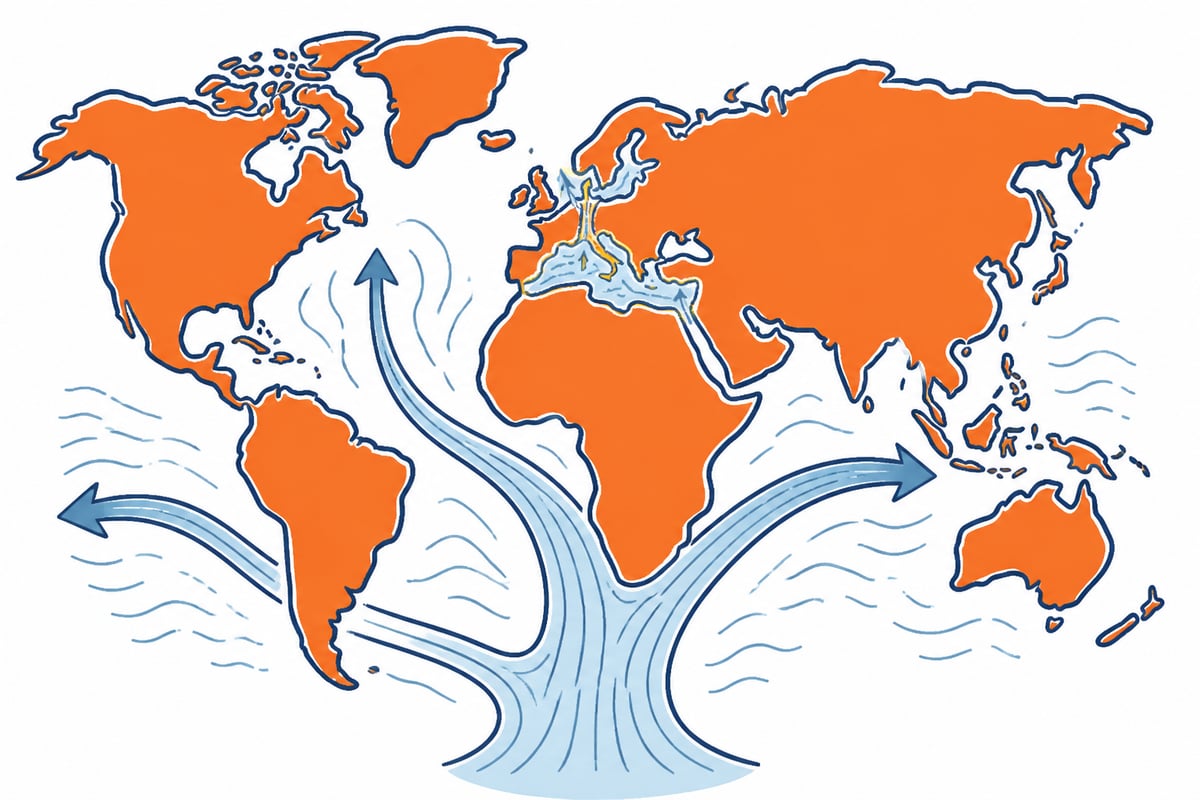
Together they make up the greater part of the world's water. Geographers also distinguish the Southern Ocean around Antarctica and the Arctic Ocean around the North Pole, so you often count five oceans in total. There are, of course, no boundary lines on the water itself. It is actually one world ocean that we've conveniently divided into parts.
The Pacific Ocean: the giant among the oceans
The Pacific Ocean is by far the largest: it covers more than 155 million km² and has an average depth of about 4,000 meters, according to NOAA Ocean Exploration. You could fit all the continents in it and still have water left over. It is also home to the Mariana Trench, the deepest point in the world.
The Atlantic Ocean: our neighbor
For the Dutch, the Atlantic Ocean is the ocean closest to home. The water that hits the French and British coasts flows through the Channel to our own coast. That is where the transition from ocean to sea begins.
The Indian Ocean: warm and full of life
The Indian Ocean lies between Africa, Asia and Australia. It is warmer than the other two and is known for its coral reefs, islands and the monsoon winds that shape the lives of millions of people.
How large and how deep is the ocean, really?
The ocean covers about 70 percent of the Earth's surface, and that figure is easier to feel than to grasp. NOAA Ocean Exploration gives this percentage, meaning land makes up only the remaining 30 percent. Look at a globe from the right angle and you see almost nothing but blue and very little land.
The depth is impressive as well. The ocean has an average depth of 3,682 meters. That is almost four kilometers of water above the average seafloor. The deepest known point, the Challenger Deep in the Mariana Trench, is listed by the same source at about 10,935 meters. Place Mount Everest on the floor of that trench, and its summit would still be underwater.
Size and depth vary by ocean. The Pacific Ocean covers more than 155 million km² and has an average depth of about 4,000 meters, according to NOAA Ocean Exploration. Its average therefore sits well above that of the world ocean as a whole, which helps explain why the deepest point is found there.
A sea can’t compete with that. Some seas, like the North Sea, are much shallower than the open ocean.
Is the North Sea an ocean?
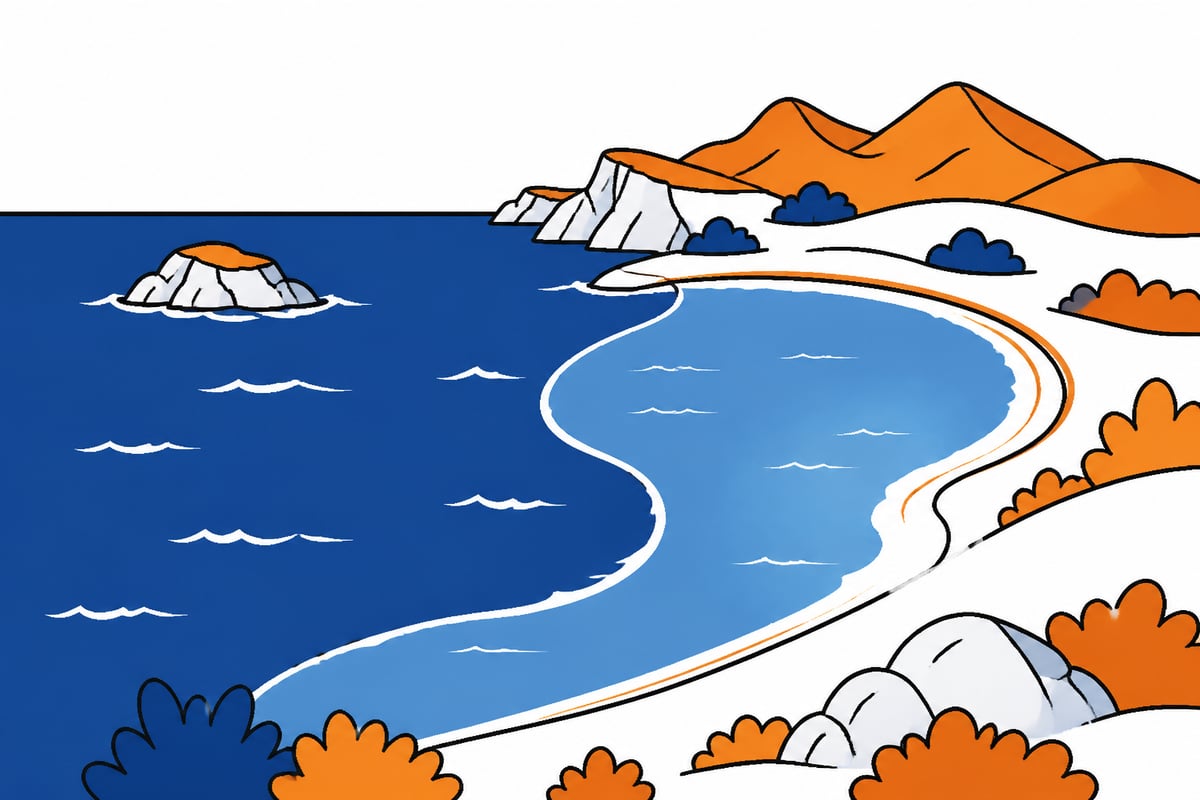
No, the North Sea is a sea: a marginal sea of the Atlantic Ocean, shallow and bordered by land on three sides.
That is no coincidence. The North Sea is a fairly shallow sea compared with the ocean. The contrast with the open ocean, which has an average depth of 3,682 meters, is large: the North Sea is, by comparison, a wading body of water. Atlantic water enters through the Channel in the south and the open northern side. That means your walk along the Dutch coast actually travels along an outlying corner of the ocean.
The reason the water here still feels different from an ocean coast is that limited depth and surrounding landmasses matter. The waves are shorter and steeper, the water heats up faster and cools down faster, and tides and wind determine the character much more than in an open ocean. A stormy day on the Zeeland beach therefore feels very different from a day on the Portuguese Atlantic coast, even though the water belongs to the same great whole.
Anyone who wants to see the North Sea inside their home can choose the North Sea calendar 2027, which features our own coastline month after month. The Zeeland calendar 2027 also shows how sea, beach and dikes shape the landscape.
What types of seas exist?
There are three types of seas: marginal seas, Mediterranean seas and inland seas.
Marginal seas lie at the edge of an ocean, partly separated by islands or a peninsula. The North Sea is a classic example.
Mediterranean seas lie between continents and are connected to the ocean via a narrow passage. As the name implies: the Mediterranean Sea lies between Europe, Africa and Asia, and is connected to the Atlantic Ocean via the Strait of Gibraltar.
Inland seas are largely or entirely surrounded by land. The Caspian Sea is the largest example and is called a sea, although strictly speaking it is an enormous lake.
This explains why the name sometimes causes confusion. Not every body of water called a "sea" fits the same definition. Sometimes the name simply grew out of history.
Why do the sea and ocean taste salty, and is there a difference?
Both sea and ocean taste salty because rainwater dissolves minerals from rock and carries them via rivers to the water, where only the water evaporates and the salt remains.
The salinity does vary by location. A sea that receives a lot of fresh river water, like the Baltic Sea, is less salty than a warm, enclosed sea where much water evaporates. In the Red Sea and the Mediterranean Sea the water is therefore saltier than average ocean water.
Dat verschil is ook te zien in het leven onder water. In de koude Noordzee leven andere soorten dan in de warme Indische Oceaan, en rond zeeën zie je vaak kustvogels, platvissen en zeehonden. Wie van dieren houdt, vindt in de zeeschildpadden kalender 2027 een mooi inkijkje in het leven in warme zeeën en oceanen.
What exactly does ocean mean?
The word ocean means the large, continuous saltwater mass that covers most of the Earth, and comes via Latin from the Greek Okeanos. How large that part is is shown by the ocean itself: it covers about 70 percent of the Earth's surface, according to NOAA Ocean Exploration. So land is actually the exception on a planet largely made of water.
In Greek mythology Okeanos was a god, the stream that encircled the inhabited world. The ancient Greeks pictured the earth as a disk with a river around it, and that image persisted for centuries. It fits strikingly well with how we view the ocean today: one large whole that embraces all continents. An old idea that, in a way, is confirmed by modern geography, although we now know the world ocean is far deeper and more complex than a stream at the edge.
You also hear the word used figuratively. An "ocean of time" or an "ocean of possibilities" refers to something vast, and that says a lot about how we experience the ocean. Anyone standing on the coast seeing nothing but water to the horizon immediately understands why the word is so often borrowed for anything too big to grasp.
Bringing sea and ocean into the home with a calendar
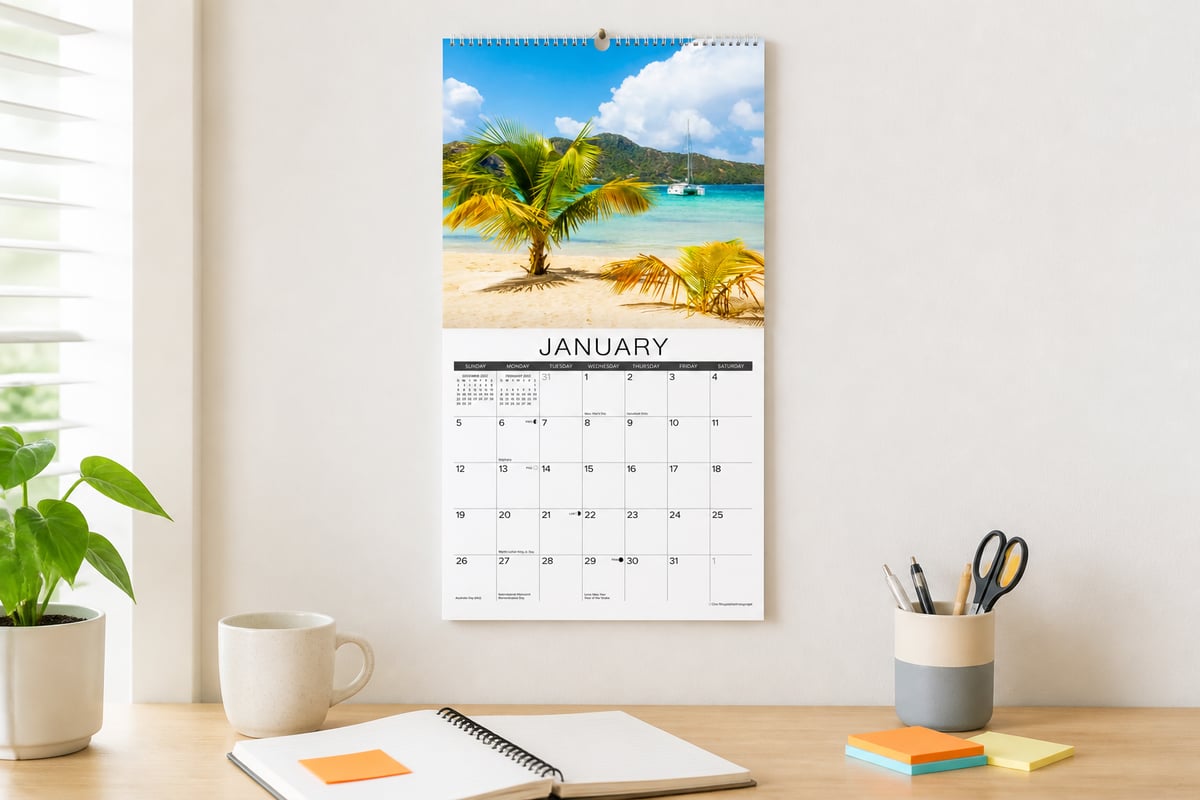
A calendar with sea and ocean brings the feeling of a coastal walk into the home year-round. A new horizon each month, and that’s exactly why such calendars are so beloved on kitchen walls and in home offices.
For lovers of sun and sand, the The Most Beautiful Beaches Calendar 2027 is an excellent choice. Each month brings a new coastal scene into the home, with white sand and clear blue water.
Those who prefer a calendar that directly reflects the theme of this article have plenty of choices:
A sea eagle calendar 2027 for lovers of the large bird that soars above the coast.
At Kalenderwinkel.nl you can order before 16:00 on weekdays and your package will be dispatched the same day. Shipping within the Netherlands is free from €49. Returns cost nothing, and for questions you can reach customer service on weekdays via WhatsApp and email.
Handy aids for those who live or build closer to the coast
If you own a house or garden by the water, you often have to deal with boundaries, plot measurements and choices for layout. Coastal subsoil can differ from inland, making a clear view of your own plot especially useful before building or renovating. To look up plot boundaries and measurements, Kadastraleperceelkaart.nl offers a quick way to find cadastral maps. That comes in handy when placing a fence, laying out a terrace or planning an extension, because you’ll then know exactly where your land ends and your neighbor’s begins. This helps prevent disputes over boundaries.
For a kitchen with a view of the dunes or the beach, Kort Keukens can help with delivery and installation. Custom work is often a smart choice on the coast because a house with sloped roofs, a bay window or a narrow passage rarely fits standard sizes. Think of a kitchen island that fits exactly in front of the large window so you can watch the horizon while you cook.
Once your new kitchen or workspace is in place, a calendar with sea and beach imagery completes the space. A coastal picture on the wall reminds you every day why you live here.
FAQ
Why is the Caspian Sea called a sea and not a lake?
The Caspian Sea is completely surrounded by land and would strictly speaking be a lake. The name developed historically, partly because the water is brackish and the area is so vast that it resembles a sea.
Can you swim in the ocean the same way you swim in the sea?
Yes, you can swim in both, but the conditions differ. On an ocean coast waves and currents are often stronger, so pay attention to flags and local warnings before you go into the water.
Is every sea connected to the ocean?
Almost all seas are directly or indirectly connected to an ocean. Only fully enclosed bodies of water, such as the Caspian Sea, have no open connection to the world’s oceans.
Grab a pen today and mark the dates of your next trip to the coast in your own calendar, so the sea isn’t just hanging on the wall. If you want a calendar that captures that feeling all year, consider the De Mooiste Stranden Kalender 2027. At Kalenderwinkel.nl you can view the full range and choose the calendar that fits your year.