Discover the Borzoi, a majestic Russian sighthound with a fascinating history. Read about temperament, care, and lifestyle.
There is something magical about the first meeting with a borzoi. You see this noble dog approach, its long, silky coat blowing in the wind, and immediately feel a connection to a rich past. The borzoi, also known as the Russian wolfhound, carries a heritage that traces back to the Russian tsars and nobility. This graceful sighthound combines a unique mix of speed, elegance, and a surprisingly gentle personality. For enthusiasts who take the time to truly get to know this breed, a world of refined beauty and loyal friendship opens up.
The enchanting history of the borzoi
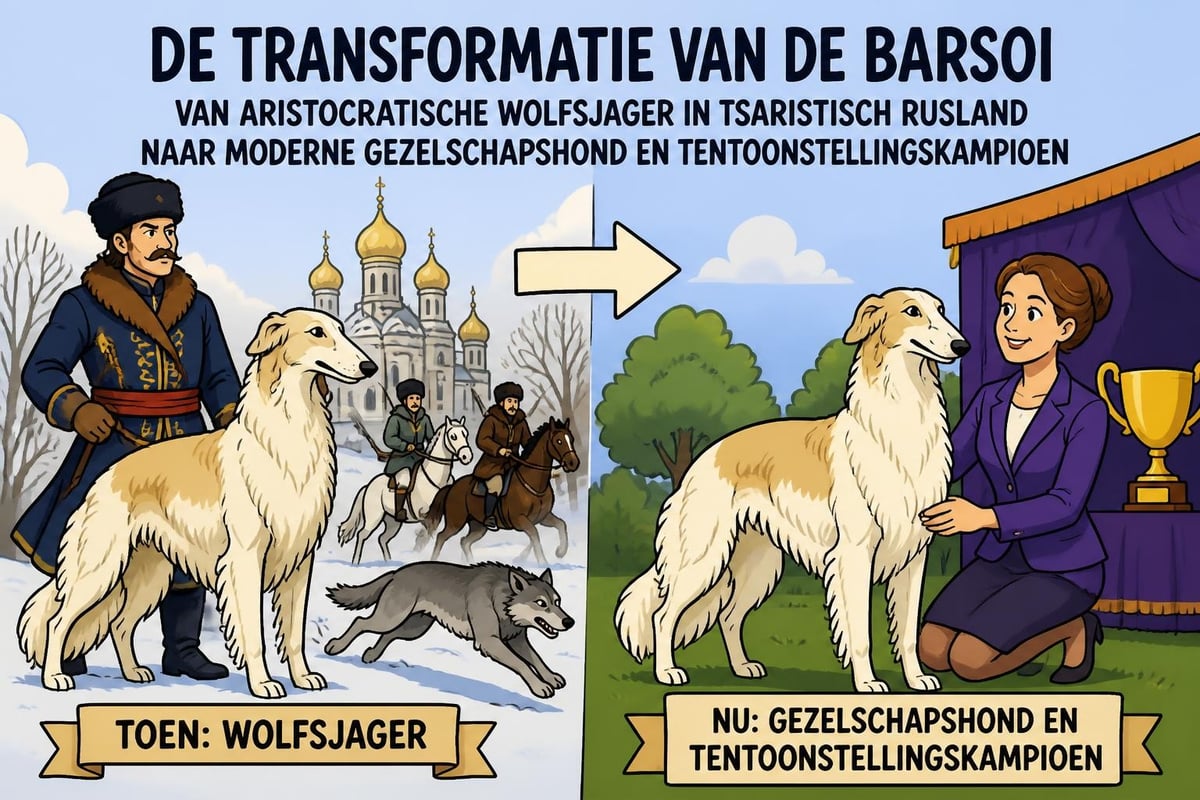
The origin of the borzoi is deeply rooted in the Russian landscape of centuries past. According to historical sources such as Encyclopedia Britannica, this breed was bred by Russian aristocrats as early as the 13th century. The word "barsoi" comes from the Russian word "быстрый" (bystry), which means "fast" — a perfect name for these running beauties.
From wolf hunting to salon symbol
In the 17th and 18th centuries, hunting with borzois was a favorite pastime of the Russian elite. Whole troops of dogs were deployed in spectacular hunts, where they, together with riders, chased wolves across the vast steppes.
The classic borzoi hunt consisted of:
Teams of two to three dogs per wolf
Riders on horseback who led the pursuit
Hunt masters who coordinated the entire process
Ceremonial moments before and after the hunt
After the Russian Revolution, the fate of the borzoi changed drastically. The breed became associated with the aristocracy, which nearly led to its extinction. Fortunately, breeders in Western Europe and America had already imported specimens, preserving the bloodline. The American Kennel Club recognized the borzoi in 1891, giving the breed a safe home outside Russia.
The character behind the elegance
Anyone who thinks the borzoi is merely a stunning show dog misses the essence of this special breed. Behind that aristocratic appearance lies a complex personality that can constantly surprise owners.
Soft but independent
The borzoi is known for its calm and even temperament indoors. These dogs often behave like refined salon guests, claiming their favorite spot on the couch and lying contentedly for hours. Still, every borzoi carries the genetic code of the hunter.
Indoors
Outdoors
Calm and reserved
Energetic and playful
Enjoys company
Strong hunting instincts
Gentle with family
May chase small animals
Calm and dignified
Explosive speed up to 60 km/h
According to The Kennel Club UK, the borzoi has a reserved attitude toward strangers but forms deep bonds with its family. This is not a dog that jumps into anyone's lap, but rather shows affection selectively.
Build and outward features
The borzoi embodies physical perfection for a sighthound. With a withers height of 68 to 85 centimeters for males and 61 to 78 centimeters for females, it is an imposing presence.
The characteristic silhouette
Distinctive physical traits:
Long, narrow skull with minimal stop
Deep chest for optimal lung capacity
Curved back that combines power and elegance
Long, low tail with a curl at the end
Long, silky coat that ripples with movement
The borzoi's coat is a work of art in itself. It comes in practically every color: white, cream, gold, red, gray, black, or any combination of these with spots and markings. The coat is longer on the body, with embellishments (feathering) on the ears, chest, tail, and legs.
Caring for your borzoi starts with understanding
Having a borzoi means committing to specific care needs. This noble dog demands attention, but rewards it generously with loyalty and presence.
Coat maintenance: a ritual of connection
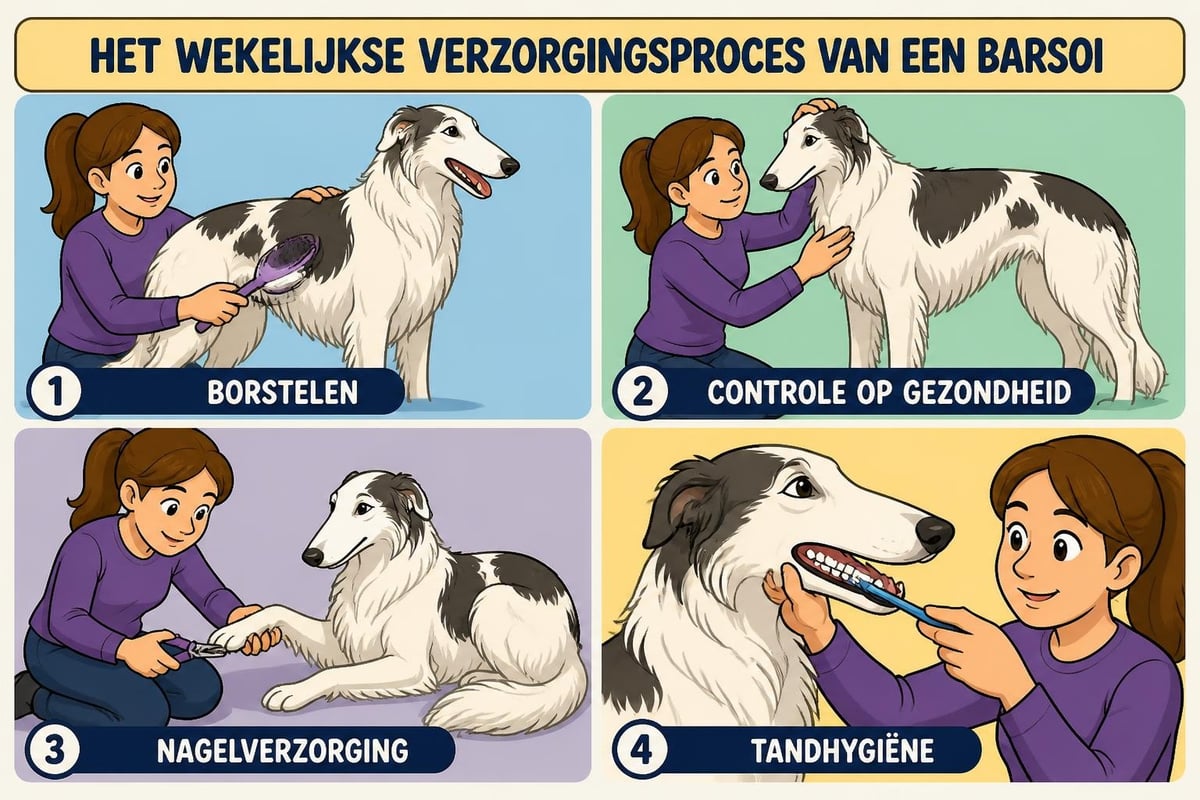
Brushing a borzoi quickly becomes a meditative moment between dog and owner. Thorough brushing two to three times a week is necessary to prevent mats and keep the coat in top condition.
Start with a metal comb for tangled tufts
Use a soft brush for the main body
Pay extra attention to feathering zones
Check for skin irritations while brushing
Finish with a shine-enhancing spray if desired
Bathing is only needed a few times a year, unless the dog has rolled in something unpleasant. The natural oils in the coat keep it self-cleaning.
Exercise: short sprints and long walks
Although the borzoi can be a calming presence at home, it needs regular exercise. These are sprinters, not marathoners. Short, intense running sessions in a securely fenced area allow the borzoi to show its natural speed.
Ideal exercise schedule:
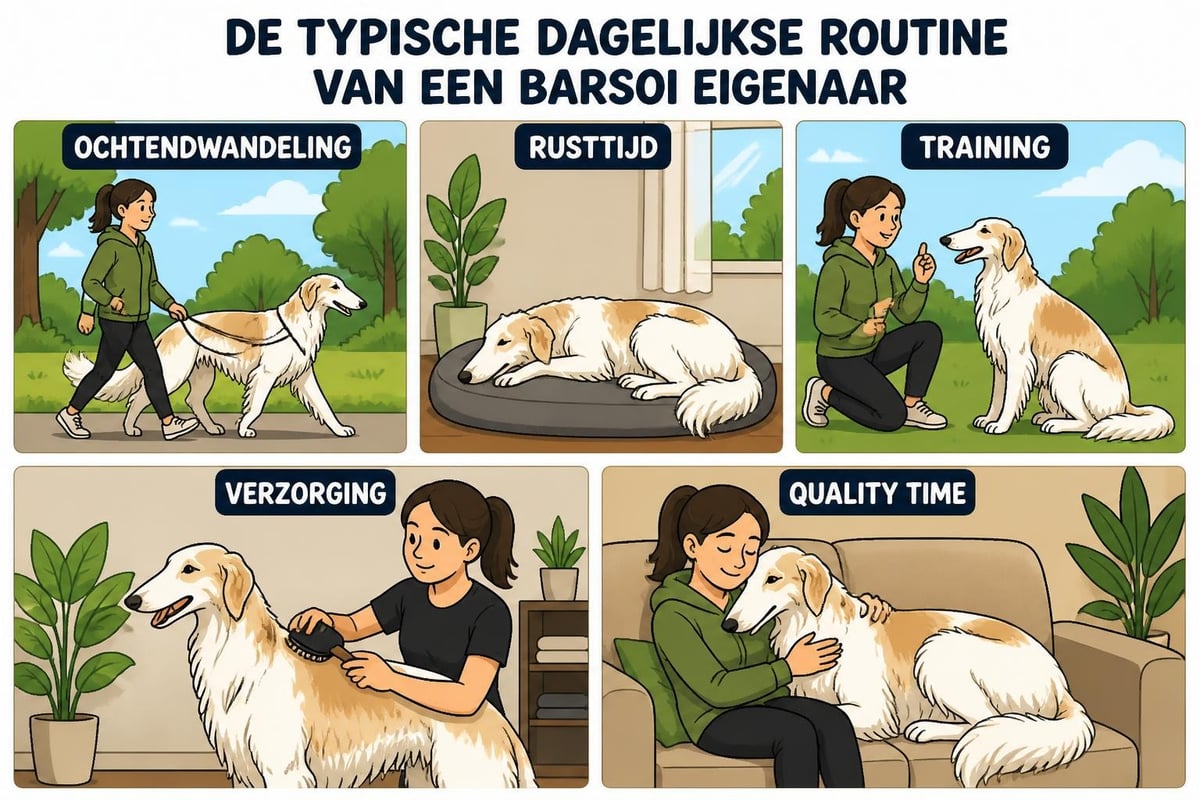
Daily walk of 45–60 minutes
Off-leash 2–3 times per week in a safe area
Mental stimulation through scent/search games
Social interaction with other sighthounds
Given their strong prey drives, a borzoi should always be kept on lead in unfenced areas. A hare or cat in the distance can undo all training when the chase instinct takes over.
Health and lifespan
The borzoi has an average lifespan of 10 to 12 years. Like many large breeds, the borzoi has specific health concerns owners should be aware of.
Heart issues and gastric dilatation-volvulus
Scientific research on sighthound breeds has shown that borzois can be prone to heart conditions, especially as they age. Regular veterinary check-ups are essential.
Gastric dilatation-volvulus (GDV) is a life-threatening condition in which the stomach fills with gas and twists. Large, deep-chested dogs are at increased risk.
Preventive measures GDV
Why it helps
Smaller meals, multiple times per day
Reduces gas formation
Wait to exercise after eating (1–2 hours)
Prevents stomach shifting
Avoid elevated feeding bowls
Reduces air swallowing
Encourage calm eating
Less air gulping
Other conditions borzoi owners should watch for include hip dysplasia, although this is less common than in some other large breeds, and eye problems such as progressive retinal atrophy.
Training and socialization: building trust
The borzoi is intelligent but has an independent spirit. This makes training an interesting dance between patience and consistency.
Positive reinforcement works wonders
Harsh training is counterproductive with this sensitive dog. Borzois respond excellently to positive reinforcement, using rewards and praise to shape behavior without damaging the bond with the owner.
It is important to start socialization early. Puppies should meet a variety of people, sounds, environments, and other dogs from a young age. This helps temper their natural reserve and prevents shyness.
Essential training focus:
Calling from a distance (recall) – the hardest for hunting dogs
Off-leash in safe, bounded areas
Acclimation to everyday situations
Gentle corrections for unwanted behavior
Living with a borzoi: adjustments in your daily life
Having a borzoi in the house means more than a pet; it is a lifestyle adjustment. These dogs literally take up space with their length, but also figuratively with their presence.
Space and comfort
Despite their size, borzoi can adapt to apartment living provided they get enough exercise. They are surprisingly calm indoors and happy with a comfortable bed where they can stretch out. In 2026 many owners discovered that the borzoi is a calm office companion while working from home.
A fenced garden is ideal but not absolutely necessary. What is essential is a safe place where the dog can run and express its athletic instincts. Many borzoi owners join local sighthound clubs where their dogs can race together.
For owners who want to organize their everyday obligations, keeping a schedule can help. A well-organized 2027 calendar ensures veterinary appointments, training sessions and holiday plans remain clear.
The borzoi within the dog sports world
Although the borzoi is not the first breed people think of for dog sports, these dogs excel in specific disciplines.
Coursing: the natural sport
Lure coursing is the modern version of traditional hunting. Dogs chase a mechanical lure over a course, with speed, agility and enthusiasm being judged. The borzoi is in its element here.
The Fédération Cynologique Internationale recognizes the borzoi as Group 10 (sighthounds), Section 1 (long-haired or feathered sighthounds). This means they can participate worldwide in recognized coursing events.
Other suitable sports:
Agility (adjusted pace)
Rally obedience
Conformation shows
Therapy dog work
The borzoi community: connecting with like-minded people
The relative rarity of the borzoi has created a close-knit community of owners. Breeders and enthusiasts generously share their knowledge, supported by organizations such as the United States Borzoi Club.
Responsible breeding and adoption
For those considering acquiring a borzoi, it is crucial to contact responsible breeders. Good breeders test their dogs for hereditary conditions, socialize puppies from a young age, and remain available for advice throughout the dog's life.
Adoption options also exist. Borzoi rescues take in dogs that need a new home, often due to changed owner circumstances. These dogs can be wonderful companions for people who want an adult dog.
Questions to ask a breeder:
What health screenings have been performed?
May I meet the parent dogs?
What is your socialization program for puppies?
Do you offer lifelong support?
Can you provide references from previous buyers?
Borzoi and other pets: a delicate balance
Whether a borzoi can live with other pets has no simple answer. It depends on socialization, individual temperament, and the type of pet.
Dog-to-dog relations
Borzoi often live harmoniously with other dogs, especially other sighthounds who understand their communication style. They play in a unique way – short bursts of sprinting alternating with rest periods. Smaller, fast dogs can unintentionally trigger the prey drive.
Living with cats is possible but requires introduction from puppyhood. Even then, vigilance is necessary. A running cat outside can still trigger the instinct, even if the house cat is fully accepted.
The borzoi as a family dog
Families with children can have wonderful experiences with a borzoi, provided certain considerations are taken into account.
The borzoi is generally patient and gentle with children, but their large size makes them less suitable for households with very young children. An enthusiastic borzoi running can accidentally knock over a toddler.
Older children learning to show respect for the dog can develop a special bond. The borzoi often becomes a loyal companion who lies beside the child during reading sessions or calmly accompanies them on bike rides.
Child age
Suitability
Points of attention
0-3 years
Moderate
Supervision due to size
4-8 years
Good
Learning respectful interaction
9-15 years
Excellent
Can help with care
16+ years
Excellent
Ideal match for responsibility
Costs of keeping a borzoi
Honesty about the financial side of keeping this dog is important for prospective owners.
Initial costs:
Purchasing a puppy from a reputable breeder: €1,500-€2,500
Basic supplies (bed, leash, toys): €300-€500
Initial veterinary checks and vaccinations: €200-€300
Training lessons: €200-€400
Annual recurring costs:
High-quality dog food: €800-€1,200
Veterinary check-ups and preventive care: €300-€500
For dog owners who want to keep track of their expenses, a clear planner or calendar can help schedule veterinary appointments and expenses. Organization is the key to responsible pet ownership.
The future of the borzoi
In 2026 the borzoi faces interesting developments. The breed is slowly gaining popularity outside traditional circles, while breeders work hard to maintain genetic diversity and health.
Modern challenges and opportunities:
Awareness about genetic health testing
Growing interest in rare dog breeds
Online communities sharing knowledge
Improved veterinary care specifically for sighthounds
Breeders are cautiously experimenting with new bloodlines to reduce hereditary conditions, always with respect for the characteristics that make the borzoi so unique. The balance between preserving tradition and advancing health is delicate but crucial.
The borzoi remains a dog for connoisseurs. This is not a breed for everyone, but for those who take the time to understand these elegant dogs, a world of unparalleled beauty and loyalty opens up. It is a choice for quality of life over convenience, for depth over superficiality.
The borzoi embodies a timeless elegance that has endured through the centuries, from the Russian steppes to modern living rooms worldwide. This special dog requires dedication, understanding and passion, but rewards owners with a unique bond that is hard to describe. For those who want to keep the daily concerns and appointments for their borzoi organized, Kalenderwinkel.nl offers a wide range of calendars and planners for 2027, so no veterinary check-up, training session or grooming routine is forgotten.