Discover everything about the Bouvier des Flandres: from its fascinating history as a working dog to its unique personality and care needs.
There are dogs that win your heart with their elegance, and there are dogs that impress with their strength. The Bouvier des Flandres belongs to that rare category that possesses both qualities. With its imposing appearance and gentle character, every bouvier tells a story of loyalty, intelligence, and unconditional devotion. This Belgian-French shepherd dog has fulfilled countless roles through the centuries and still does so with the same dedication its ancestors showed on the farms of Flanders.
The fascinating origin of the bouvier
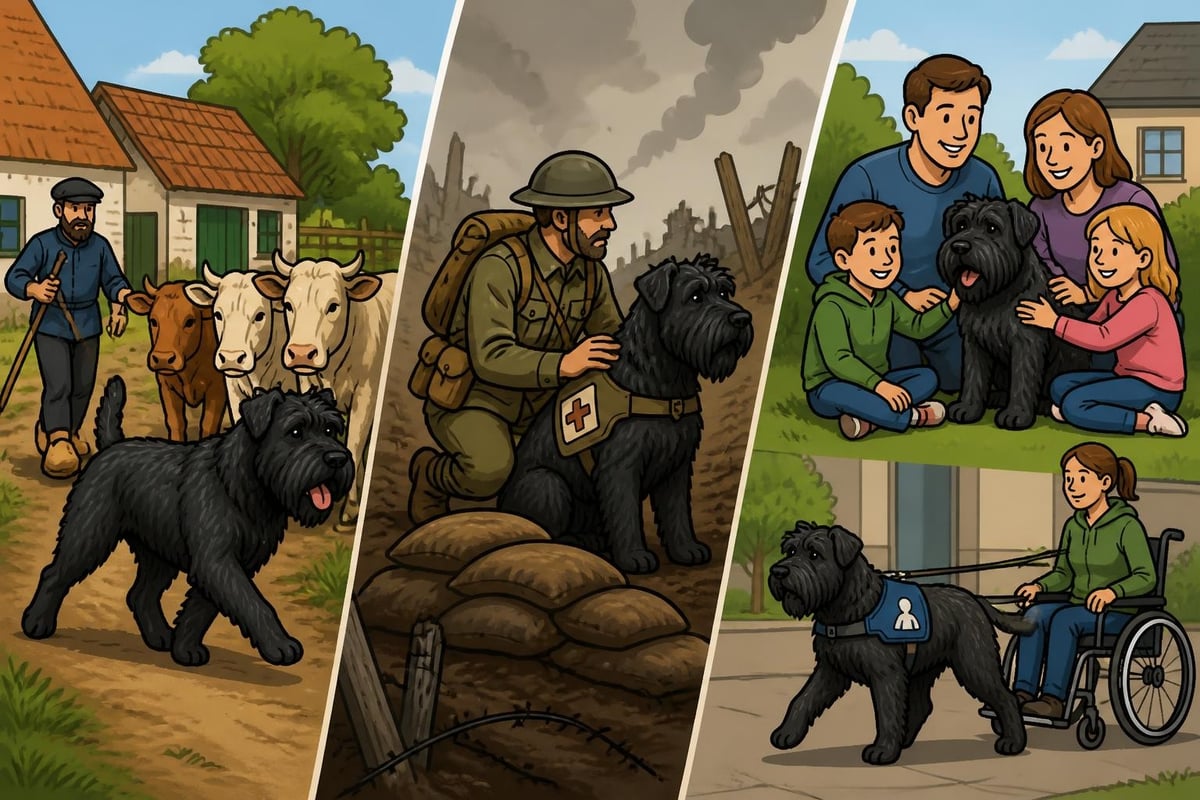
The story of the bouvier begins in the green meadows of Flanders, where farmers in the late nineteenth century needed versatile working dogs. These dogs had to drive cattle, pull carts, guard property, and even churn butter by running in a treadmill.
The name "bouvier" literally comes from the French word for "cowherds". These sturdy dogs were not bred for their looks but for their work ethic. Every bouvier had to prove its worth in daily rural life.
From farm dog to war hero
World War I marked a dramatic turn in the bouvier’s history. Many farms were destroyed, and countless dogs were lost. Yet the surviving bouviers showed their resilience by serving as message dogs, guards, and even ambulance pullers.
A Belgian veterinarian, Captain Barbry, played a crucial role in preserving the breed. He used his own bouvier, named Nic de Sottegem, in the army and ensured the breed did not fade into obscurity. The official FCI breed standard documents this rich history and sets clear characteristics.
The character: more than just muscles
When someone meets a bouvier for the first time, the impressive build is seen first. But owners know the true beauty lies in the character of these dogs. A bouvier is not a passive companion; he wants to be involved in everything his family does.
Intelligence and work drive
Bouviers are known for their remarkable intelligence. They learn quickly, have good memory, and can perform complex tasks. These traits make them well suited for various disciplines:
Obedience training: Bouviers excel in competitive obedience
Protection work: Their natural vigilance makes them ideal guardians
Assistance dog work: As guide dogs or therapy dogs they show patience and stability
Sports activities: From agility to tracking, bouviers love challenges
The American Kennel Club emphasizes that this work drive requires an owner who invests time in training and mental stimulation.
Loyalty and protective instinct
A bouvier chooses its people carefully and remains loyal to them for life. This protective nature does not show as aggression but as vigilance. A well-socialized bouvier can tell the difference between a real threat and an innocent stranger.
Characteristic
Level
Practical meaning
Loyalty
Very high
Strong family bonding, can lead to separation anxiety
Protective instinct
High
Natural alertness, early socialization essential
Playfulness
Medium to high
Enjoys interaction, especially with familiar people
Patience with children
High
Tolerant and protective, if properly introduced
Independence
Average
Thinks independently but wants to be involved
Grooming: a time investment that pays off
The bouvier requires commitment, not only in training but also in daily care. That characteristic rugged coat is beautiful but requires maintenance.
The art of brushing
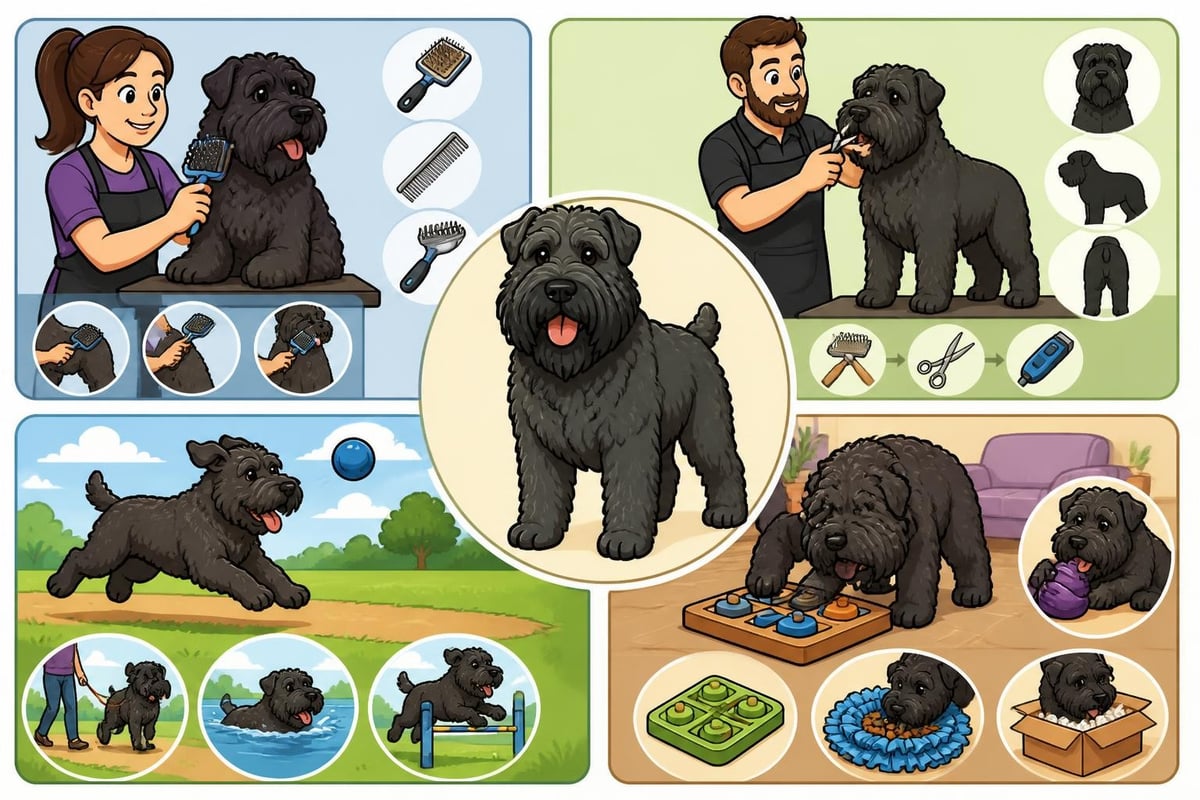
The rough-haired double coat of a bouvier is designed to provide protection from the elements. This also means the coat needs regular care to prevent matting.
Brushing routine for bouviers:
Brush thoroughly at least two to three times a week
Work systematically through the coat, layer by layer
Pay extra attention to problem areas such as behind the ears and under the belly
Use a comb to remove any tangles before they get worse
Schedule a grooming appointment with a professional every eight to ten weeks
For people who want to care for their bouvier themselves, a good pin brush, a slicker brush and a metal comb are essential tools. Trimming a bouvier is a special skill, with the coat being plucked rather than cut to maintain the texture.
Exercise and mental stimulation
A tired bouvier is a happy bouvier. These working dogs need substantial daily exercise combined with mental stimulation.
Daily walks: At least two good walks of 45–60 minutes each
Variety: Alternating between leisurely walks and more intense activities
Playtime: Interactive games that challenge mind and body
Training: Short training sessions keep the bouvier sharp
Health: knowledge is prevention
Like all purebred dogs, bouviers have certain health issues owners should be aware of. Responsible breeders test their breeding animals for hereditary conditions.
Important conditions in the bouvier
Hip dysplasia is a developmental abnormality of the hip joint that commonly occurs in larger dog breeds like the bouvier. The Orthopedic Foundation for Animals provides extensive information on screening and prevention. Breeders have their dogs x-rayed before adding them to breeding programs.
Heart conditions deserve special attention in bouviers. As described in scientific research on cardiomyopathy, large dogs can be susceptible to specific heart issues. Regular veterinary check-ups help enable early detection.
Eye problems such as cataracts and glaucoma occur. Eye exams by certified ophthalmologists are part of responsible breeding programs.
With proper care, bouviers typically reach ten to twelve years of age. The key to a long, healthy life is prevention, good nutrition, sufficient exercise, and regular veterinary check-ups.
Older bouviers can develop arthritis, a normal aging condition in larger dogs. Joint supplements, adjusted exercise, and comfortable resting places help senior bouviers maintain a good quality of life.
The bouvier as a family member
The decision to bring a bouvier into your home is not one to take lightly. These dogs give unconditionally but also require a lot in return.
Perfect for the right family
Bouviers thrive best in households that understand what these dogs need. Active families with space, time, and dedication will find an unparalleled companion in the bouvier.
Ideal bouvier owner:
Has experience with dogs or is willing to learn thoroughly
Can invest several hours daily in exercise and training
Appreciates an engaged, sometimes somewhat stubborn personality
Has a garden or easy access to walking areas
Is willing to invest in professional grooming or learn to do it themselves
The American Bouvier des Flandres Club emphasizes the importance of education for prospective owners and provides extensive information about what owning a bouvier really means.
Socialization from a young age
A well-socialized bouvier is a confident, friendly dog that can handle a variety of situations. Socialization starts with the breeder and is continued by the new owner.
Puppy classes are indispensable. Here a young bouvier learns not only basic commands but also how to interact with other dogs and people. Exposure to different environments, sounds and experiences builds confidence.
The bouvier in popular culture
Although the bouvier may not be the most famous dog in the world, the breed has a loyal following worldwide. Its robust appearance and intelligence have made the bouvier suitable for various roles.
Famous bouviers
One of the most well-known bouviers was probably Lucky, the dog of U.S. President Ronald Reagan. This bouvier lived in the White House for years and showed the breed can function in busy, formal environments.
In Europe bouviers are popular in police and security work. Their nose, intelligence and determination make them excellent for detection work and patrols.
Choosing a bouvier responsibly
The decision of where you get your bouvier is crucial. Responsible breeders invest in the health, temperament and socialization of their puppies.
What makes a breeder responsible?
A good breeder tests all parent dogs for hereditary conditions, ensures optimal socialization of the puppies, and remains available for advice throughout the dog's life. They ask about your lifestyle and living situation to determine if a bouvier is right for you.
For people who want to adopt an adult Bouvier, there are specialized rescue organizations. Adopting gives a second chance to dogs that need a new home for various reasons.
Adult Bouviers can make wonderful pets. They are often already trained, their personality is fully developed, and they are usually grateful for a stable, loving home.
The Bouvier in everyday life
Life with a Bouvier means routine and structure, but also spontaneity and adventure. These dogs adapt to their family's rhythm but do require engagement.
A day in the life
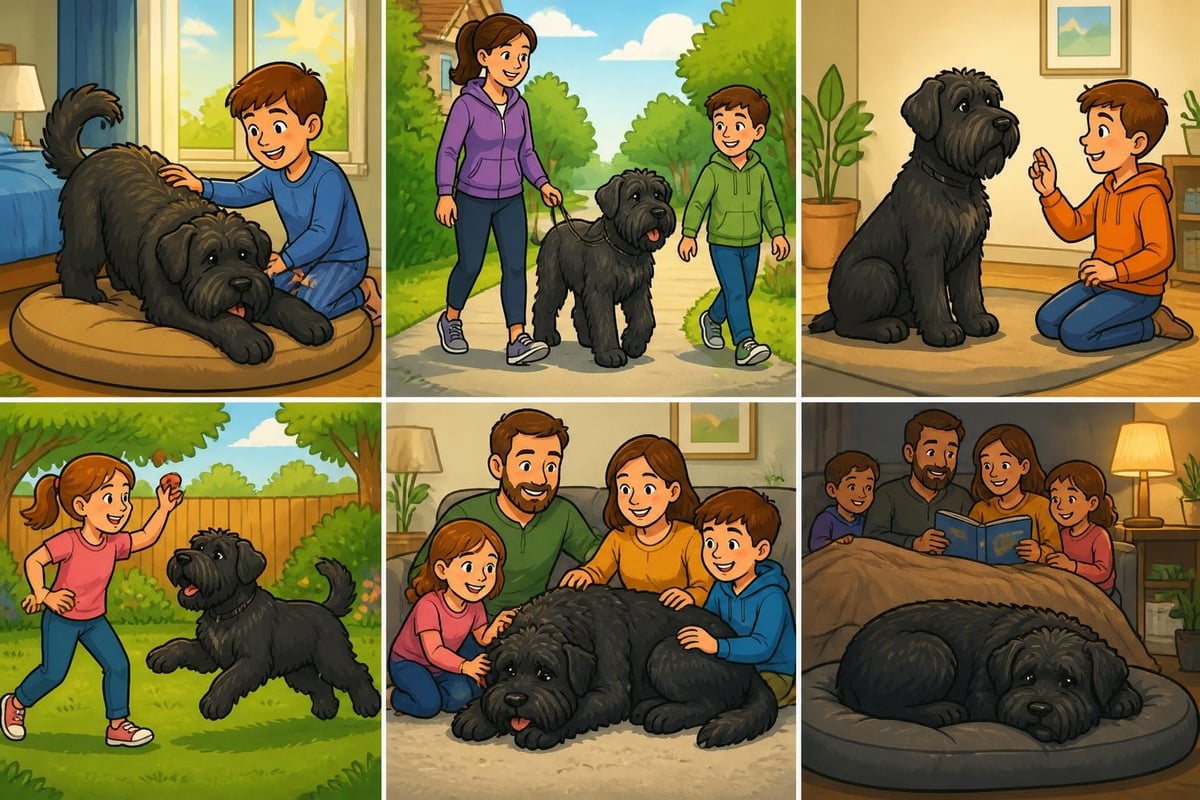
A typical day with a Bouvier starts early. After a brisk morning walk and breakfast the dog often settles close to its people. Bouviers like to be "at hand," which means they often follow your shadow around the house.
Afternoon activities can range from playful sessions in the garden to training or a visit to the dog park. Mental challenge is just as important as physical exercise. Puzzle toys, scent games, or short training sessions keep a Bouvier's sharp mind occupied.
In the evenings the Bouvier is often content to be with the family, perhaps resting its head on someone's foot. That combination of alertness and relaxation is typical of the breed.
Calendars and capturing memories
For many Bouvier owners, their dog is not just a pet but a cherished family member. Capturing moments and memories is important. A lovely way to do this is by keeping a special dog calendar where important events like birthdays, veterinary appointments, and special memories are recorded.
For owners who want to document their Bouvier's growth, a wildlife agenda like the Robert Fuller Wildlife Slim Agenda provides space for notes and photos. Tracking weight, growth, and developmental milestones helps monitor your Bouvier's health.
There are also themed calendars that reflect a love of animals, such as the What Dogs Teach Us calendar 2027, which beautifully summarizes the wisdom and lessons dogs teach us.
The future of the Bouvier breed
The Bouvier breed continues to evolve, although breeders and enthusiasts strive to preserve the core qualities of the breed. Modern Bouviers are often somewhat less robustly built than their working ancestors, but the essence remains the same: an intelligent, loyal and versatile dog.
Modern challenges
One of the challenges for the breed is preserving working traits while most Bouviers are now family dogs. Breeders are working to find a balance between temperaments suitable for family environments and maintaining the breed’s characteristic work drive.
Health screening is becoming increasingly important. DNA testing for various hereditary conditions is standard in responsible breeding programs, which benefits the overall health of the breed.
Enduring popularity
Although the Bouvier will never become a “fashion dog,” the breed continues to maintain a stable group of devoted enthusiasts. People who have had a Bouvier often remain lifelong fans of this special breed.
The versatility of the Bouvier ensures the breed remains relevant across different disciplines, from family dog to service dog and from sport partner to show champion. This adaptability, combined with its unique character, guarantees that the Bouvier will retain its special place in the dog world in the future.
The Bouvier des Flandres is a breed that requires commitment, time and love, but that investment pays back in loyalty and companionship many times over. Whether you are considering bringing a Bouvier into your home or are fortunate enough to already own one, planning and organizing care is essential. At Kalenderwinkel.nl you’ll find a wide range of calendars and planners for 2027, perfect for recording all important appointments, milestones and memories with your Bouvier. With convenient payment options and reliable shipping via PostNL, DHL or UPS, you’ll help yourself stay organized in the adventure that life with a Bouvier is.